Once that is out of the way – and the actual pre-trip prep can be more than half the fun – is when the real adventure starts. Do all that right, and all you have to focus on is enjoying one of the world’s best off-road destinations. Let’s go…

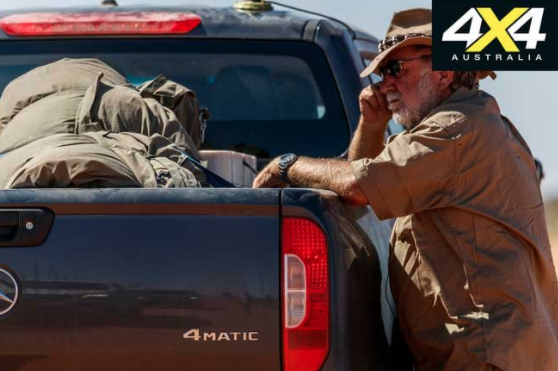
Heading into the desert is no joke but it can be fun, and will likely be the trip of a lifetime if you're well prepared. Although I don't agree with everything in this article below I think the message is the same.
Reference: https://www.whichcar.com.au/explore/4x4-desert-trip-preparation
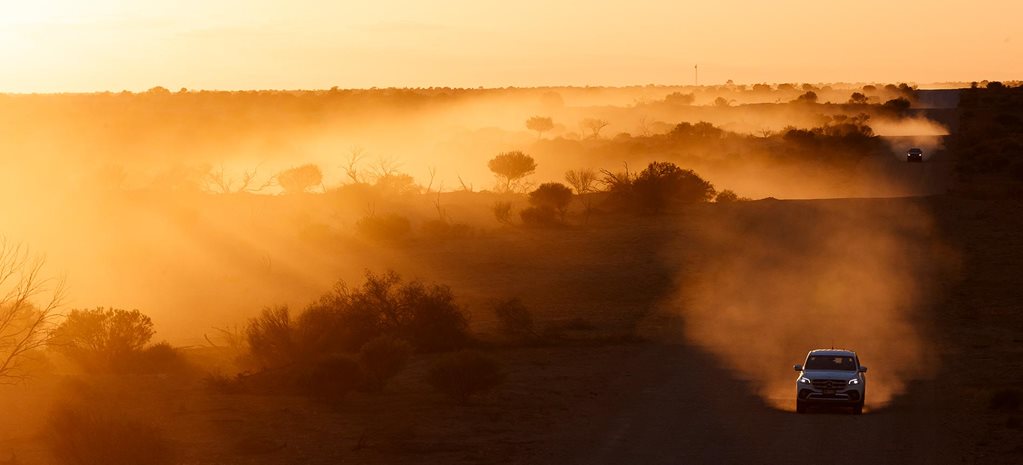
Australia’s deserts account for an estimated 70 per cent of the continent’s land mass. Pretty impressive, but not half as impressive as actually getting out there and exploring and camping in one (or more) of them.
Nothing beats that sense of utter remoteness offered by the combination of an endless red, sandy horizon, topped by the blue skies synonymous with this country’s desert regions.
The attractions of touring the desert regions go beyond that sense of isolation and remoteness and also take in the rich ties this landscape has with all Australians, whether it is the eons-old indigenous culture, or the more recent European explorers’ history.
Indeed, it is this sense of retracing the steps of these early explorers that is a big draw for visitors, and something that is far more enriched by the chance to also experience that ‘sense of place’ so ingrained in indigenous culture – along with the physical reminders of their long residence here, in the form of reliable waterholes, petroglyphs, etc.
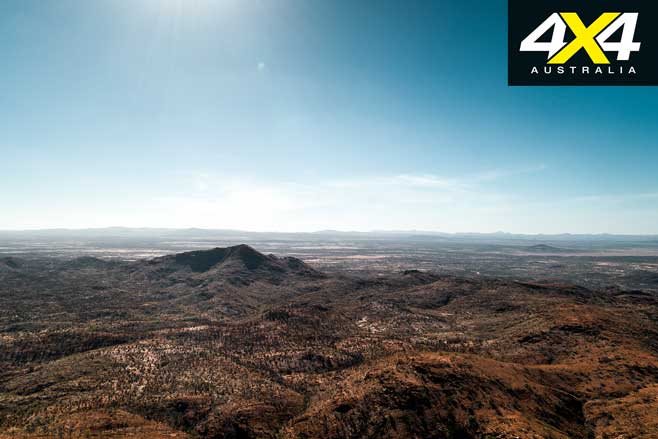
The other appeal is that, rather than being ‘the same thing every day’, a week or two (or longer) exploring one or more of Australia’s deserts really brings home just how unique each of them is, in terms of the wildlife, indigenous links, terrain, camping, the actual driving challenge and plenty more.
It all sounds impossibly romantic, of course – packing the 4x4 and heading into the desert – but that romantic notion of outback escapism needs to be, firstly, backed by a whole lot of research, preparation, planning and a big dose of that sense of adventure.
Once that is out of the way – and the actual pre-trip prep can be more than half the fun – is when the real adventure starts. Do all that right, and all you have to focus on is enjoying one of the world’s best off-road destinations. Let’s go…
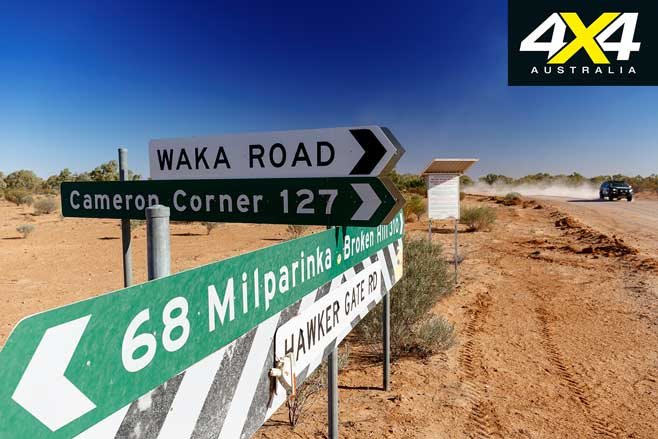
For this writer – and I am sure for most off-road tourers – poring over a series of maps is an integral part of the trip planning process, regardless of your destination. With a focus on desert travel, having access to a number of maps – and accurate ones – is key to effective trip preparation.
The reasons are many and include the obvious of seeing where your destination is in relation to your starting point, along with giving you a great overall ‘visual’ of the country you will be covering in terms of access tracks, refuelling points (whether in towns, aboriginal communities, or likely fuel drop-off/caching points), whether there are any water sources in the region, and – of course – the total distance of the route/track you will be following.
Large area maps are your best starting point (think: Hema’s excellent Great Desert Tracks maps), and from there you can move down in map scale and also start utilising digital mapping. These are great to mark potential campsites, refuel points, or places of interest.
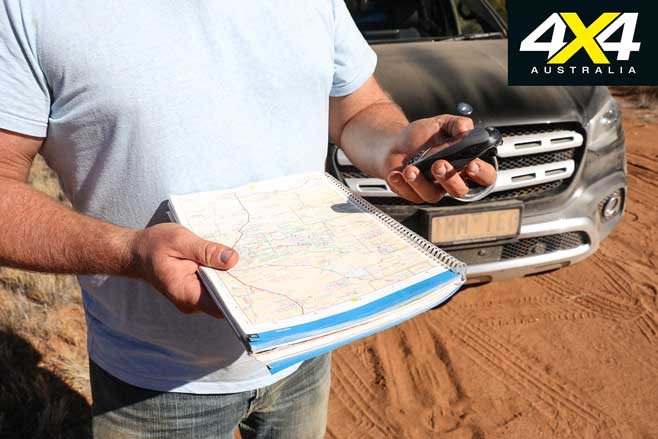
Again, Hema has its excellent phone and iPad-based app, Hema Explorer, as well as its dedicated GPS units, the Hema HX-1 and HN7. Other mapping-based planning software includes one of the most extensive: ExplorOz.com.
Some, but not all, of Australia’s deserts are comprised of both national parks and aboriginal-owned land, and one of the first checks you do need to do is that based around any essential permits you may need to traverse these lands. Most states’ national parks and the various indigenous land councils have online permit systems that are, generally, pretty easy to access and fill in.
4x4 gear test: Hema HX-1 Navigator
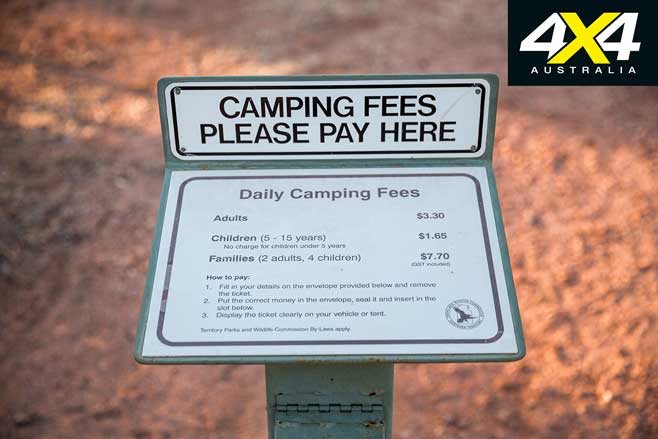
Some permits may take longer to acquire than others, though, so bear that in mind and make sure you give the relevant authorities plenty of notice of your travel dates. By doing this it allows any communication to and from regarding your trip plans to be undertaken, thus ensuring the relevant authorities know exactly where you are – and how long for.
As an example: this writer had a potential Arnhem Land trip quashed years ago after gaining approval from the Traditional Owners thanks to plenty of transparency in communication, only to have it stopped by a tie-wearing office-bound bureaucrat in Darwin. Just sayin’…
With the distances and remoteness of Australia’s deserts, planning for a trip here involves accounting for a number of unique factors, starting with one of the essentials: fuel usage. Think of some of the longer desert tracks in Oz, such as the 1619km Canning Stock Route (CSR) or the 1324km Anne Beadell Highway, and you soon realise an accurate estimate of fuel consumption is crucial to a successful desert adventure.
As most know, any vehicle will use more fuel when driving off-road. Add in the mechanical effort needed to push a two-tonne-plus vehicle through sand and you will need to factor in far heavier consumption than ‘normal’.
This would also be a good time to check on maps and/or any online resources as to the longest distance between re-fuelling points. As an example, the distance between fuel points on the CSR is a heady 977km, necessitating the planning of a fuel drop (usually at Well 23 on this track).
Some adventurers (mostly, but not exclusively) will have the capacity to lug the required amount of fuel – usually in jerrycans, sometimes in addition to a fitted aftermarket long-range tank – but that will depend on your vehicle’s load-carrying capacity. The temptation is to put jerrys up on the roof rack, but the additional load up high does affect vehicle handling.
Plus, you will need to check, not your roof-rack load capacity, but the maximum permitted load for the vehicle’s roof. You might be surprised how little that big, burly four-wheel drive wagon of yours is legally allowed to carry up top. An alternative to roof-stored fuel is to fit an aftermarket rear bar that incorporates twin jerry-can holders (or, a single jerry holder and spare wheel carrier).
The other liquid essential on any desert trip is water. And by this we mean not only having enough water on-board for keeping everyone hydrated, but for other essential activities such as cooking, washing up, personal hygiene and potentially having to top-up vehicles’ radiators.
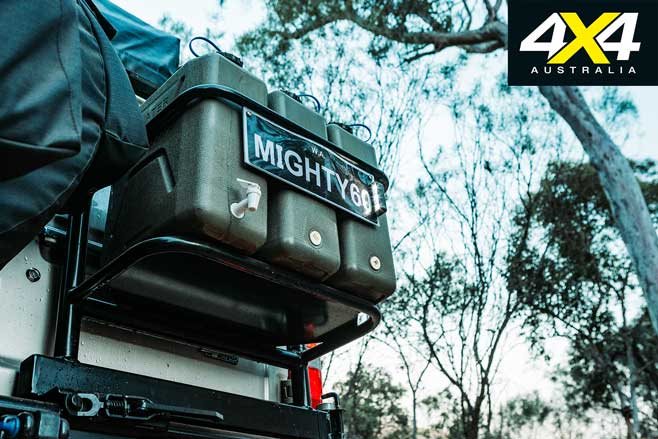
Again, distance and amount of resupply points plays a part in estimating how much you will need, but we’d recommend at least 20 litres per day, per person. Yep, that sounds a lot, and it soon adds up in terms of weight and eating into your vehicle’s load capacity. However, in this instance, it’s best not to quibble.
A further tip that applies to both water and fuel storage is to ensure your jerrycans/containers are in excellent condition and that you don’t store all the liquid in one or two containers. If the unfortunate does happen and it springs a leak, you could lose a significant portion of your water/fuel supply – something to be avoided anywhere, but especially in arid country.
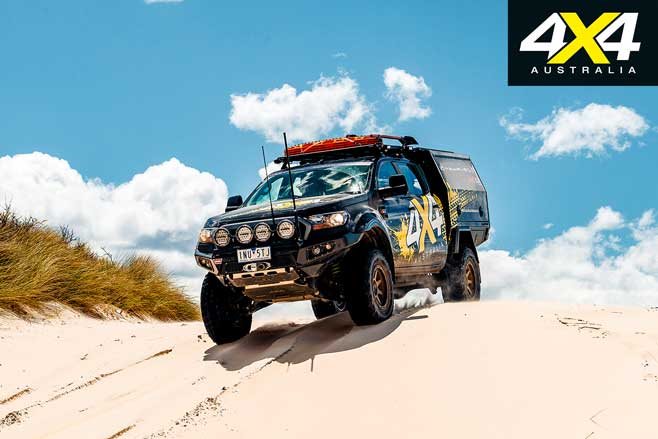
Vehicle setup for desert travel combines all the regular mods you would do to your rig to improve its off-road and remote-area capability (think: barwork for protection against animal strike and to mount lighting; all-terrain – or preferably – mud-terrain tyres; aftermarket suspension; dual-battery setup; fridge/freezer; snorkel; recovery gear; reliable comms; roof-rack), along with desert-specific tweaks.
Having a vehicle that is in tip-top condition is paramount and one of the first things you need to address as part of the desert-expedition planning process. A full going-over by a mechanic who specialises in outback travel prep is a must-do; checking for suspension (and tyre) wear and tear, as well as ensuring all engine plumbing is in robust condition and that all accessories are securely – and correctly – fitted, will mean you have already significantly reduced the chances of breaking down.
The next step will be for them (and you) to draw up a list of essential spare parts that you will need to carry in the event that something does break – and this may still happen regardless of how ‘new’ the gear is fitted to you rig (the desert is an unforgiving place) and get them to show you how to replace/fit it.
We’re not all accomplished bush mechanics (tip from this writer: travel with one!) but more basic repairs, such as how to plug a punctured tyre (yep, a puncture-repair kit is another must-pack), should be within your skill-set if you plan on spending time in remote areas. And, don’t forget to carry a second spare wheel/tyre; rough desert tracks can be murder on even the toughest tyres. Even though tyre plugs can work miracles, if you tear a sidewall, there’s no plugging that, so having a second spare brings with it plenty of reassurance.
Driving through desert country usually means negotiating myriad dunes and these are often taller/deeper than your vehicle. Fitment of a sand flag is non-negotiable as it assists any oncoming traffic being able to see you, thus avoiding a head-on collision.
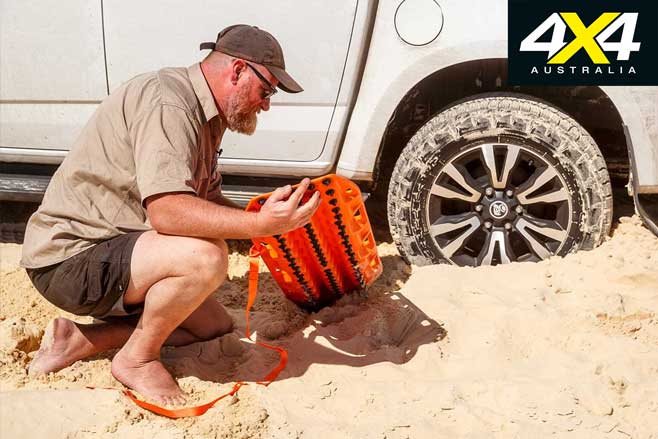
Packing specialist sand-recovery gear – on top of your normal recovery kit, which should include snatch straps, shackles, ropes, gloves, tyre levers, jack, etc. – is another must. A set (or more) of Maxtrax offers great insurance for desert travellers; these sand recovery jobbies are very robust and also very easy to use. Plus, they don’t weigh much, offering excellent recovery bang-for-bucks.
The final piece of the vehicle puzzle is an effective comms setup. Not only does a reliable UHF radio (or satphone; this is more for any emergency situation, as is a Personal Location Beacon) ensure you’re never totally stranded if the worst-case scenario eventuates; being able to call on the channel occasionally to see if there is any other traffic approaching helps reduce further the chance of a vehicle-on-vehicle incident.
Speaking of which, it goes without saying that at least one, but preferably more, of your expedition crew should have the latest First Aid training – and a comprehensive First Aid kit should be packed.
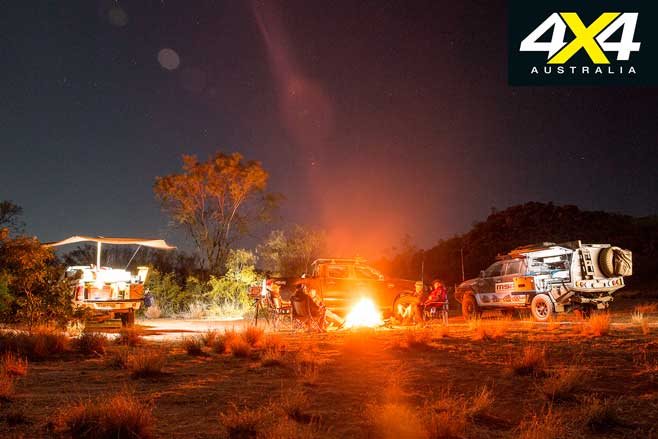
Nothing beats pulling up in the middle of the desert in the evening, cooking up a storm and cracking a coldie as the sun sets over the dunes. That sounds like a dream scenario but, as long as you have the required remote power requirements to keep the lights glowing and the fridge cool, you’ll get to enjoy that dream-like outback dining experience every night. And it does all come down to power.
To this end, it’s worth expanding your regular off-road power options, such as a dual-battery setup, to include a system that incorporates the ability to utilise the power of the sun. Portable solar panels are, these days, cheap, reliable and pretty much a standard inclusion on desert travel equipment lists.
With the desert touring season usually the time of clear days – every day – being able to set up some solar panels at camp makes the question of reliable power moot. There are myriad solar panel systems available, so you will need to research what suits your particular vehicle/requirements best. It’s worth the time invested, though, and a prime example of just what is achievable in terms of reliable mobile power options for tourers can be seen in 4X4 Australia’s long-term Ford Ranger, as featured in 4x4 Australia's 2020 Gear Guide.
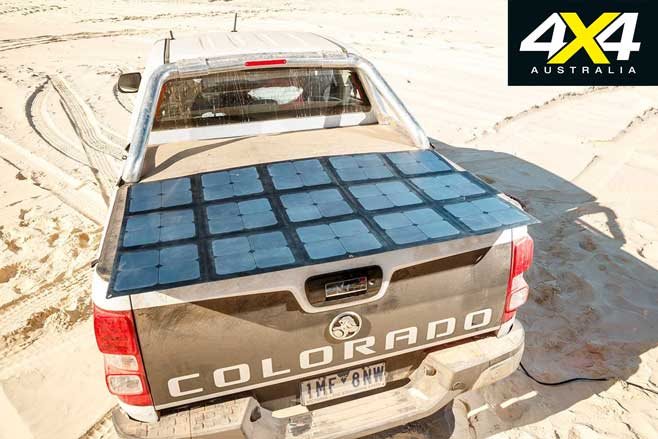
Also worth tackling is a course on basic auto-electrical repairs – or at least having some knowledge of how your vehicle’s auxiliary power setup works in case you have to troubleshoot some power-related problems.
Travelling with a portable fridge means you will be able to keep food fresh for a decent amount of time in the desert. Making it last longer is possible by selecting a fridge/freezer combo unit, where a portion of the fridge is a dedicated freezer. Another trick to ensure fresh grub for longer is to get your local butcher/food supplier to cryo-vac your meat. By vacuuming all the air out, the use-by date of meats in particular can be extended significantly.
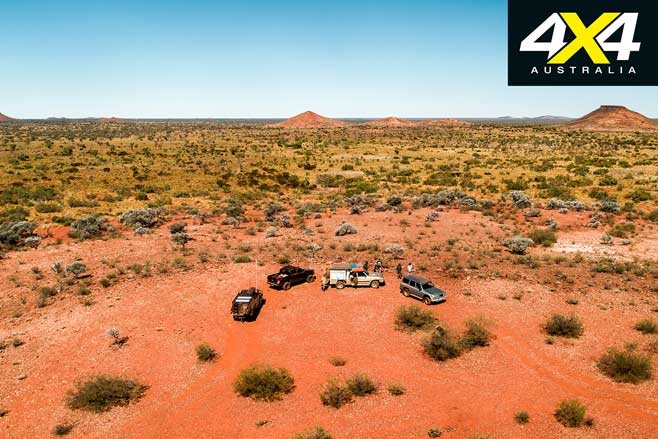
One thing often forgotten in the dreaming, researching and final planning of the big desert adventure is just how much time it can take. Driving in sand is where you need to balance momentum and patience, and also where you need to realise it will take longer to negotiate numerous dunes than it would to traverse a long, straight outback road.
Even though the actual distance between two points may be ‘not that long’, driving in soft sand, having to perform the occasional recovery, and stopping to take in your surrounds, all takes time – and makes for the perfect excuse not to rush.
There’s no reason you can’t stay at Camp 15 on the Madigan Line for more than one night – you’ve spent months and lots of money planning and prepping to get yourself out to a destination few people will ever experience, so make sure you allocate enough time to soak it up properly. After all, you’ll be on ‘desert time’, in a place that has seen thousands of years of indigenous inhabitants and a few hundred years of explorers traversing it. We’re sure it – and you – will cope with spending a little bit of time out there…
Former 4x4 Australia Editor, Dean Mellor, has been fortunate enough to traverse some of this country’s most spectacular desert country, and is a huge fan of not only Australia’s red heart, but also being thorough and considered in your preparation.
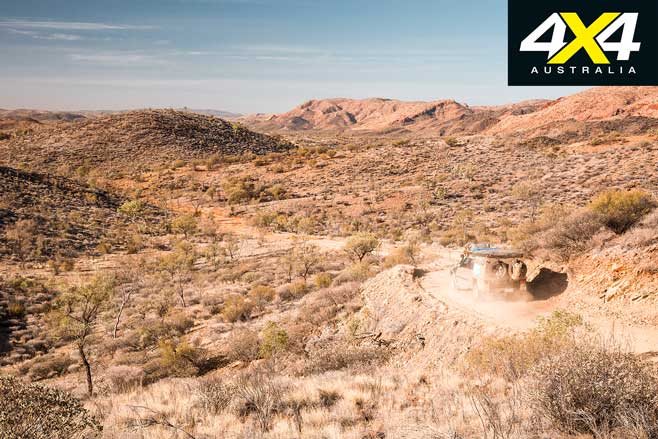
“One of the most satisfying things about preparing for a desert expedition is figuring out exactly where you want to go, where you want camp (to see what want to see and experience what you want to experience), and where you’ll be able to source supplies (fuel, water and food).
The best way to plan a trip is using a combination of maps including an overall map of the area in which you’ll be travelling and several detailed maps. A paper map is the best option to cover the general area, and these days I rely on electronic maps – Hema Explorer on my iPhone, iPad and HX-1 Navigator provides Hema mapping as well as topographic mapping, covering all of Australia.
Carrying enough fuel and water is essential for any desert trip. When calculating fuel usage, remember that your vehicle will use more fuel in trying off-road conditions than it will cruising on the highway, and always throw in a good safety margin. Perishable food, of course, will need to be stored in a portable fridge/freezer, and you should always make sure this is working properly before departure, and that you have spare fuses/leads/plugs etc. and a small electrical repair kit.
Thorough vehicle preparation is important prior to setting off on a big trip. If you don’t have a lot of mechanical skills yourself, make sure your vehicle gets a thorough going-over by a specialist 4WD mechanic, and ask them what spares you’ll need to carry with you and what tools you’ll need to make minor repairs.
If you suffer a major mechanical breakdown, or some other big problem when you’re in the middle of the desert, you’ll want to make sure you’re carrying a remote-area communications device such as HF radio, a satellite phone or a satellite communicator, and make sure you test it before you leave and that your subscription is up to date.
As well as supplies, tools, spares, comms and navigation equipment, some essential items you’ll need for desert touring include a complete vehicle recovery kit, a tyre repair kit (tools, plugs, patches, glue, tyre levers, working jack etc.), electrical power supply (dual battery system, charging set-up, inverter etc.) and all the obvious stuff like camping gear, lighting etc.
You’ll also need a comprehensive (and up to date) first aid kit, and you should make sure your first aid training is current. When travelling, some personal items I always carry with me include a Leatherman, a camera and a handheld UHF.
No matter how prepared you are, many things can still go awry on desert expeditions. I’ve seen all sorts of stuff break on trips from shock absorbers and leaf springs to sway bars and CV joints. Although I have a modicum of mechanical knowledge, I’ve usually been fortunate enough to travel with people who would easily pass as bush mechanics. If you don’t know how to fix stuff, you should learn to… or travel with someone who does.” – Dean Mellor