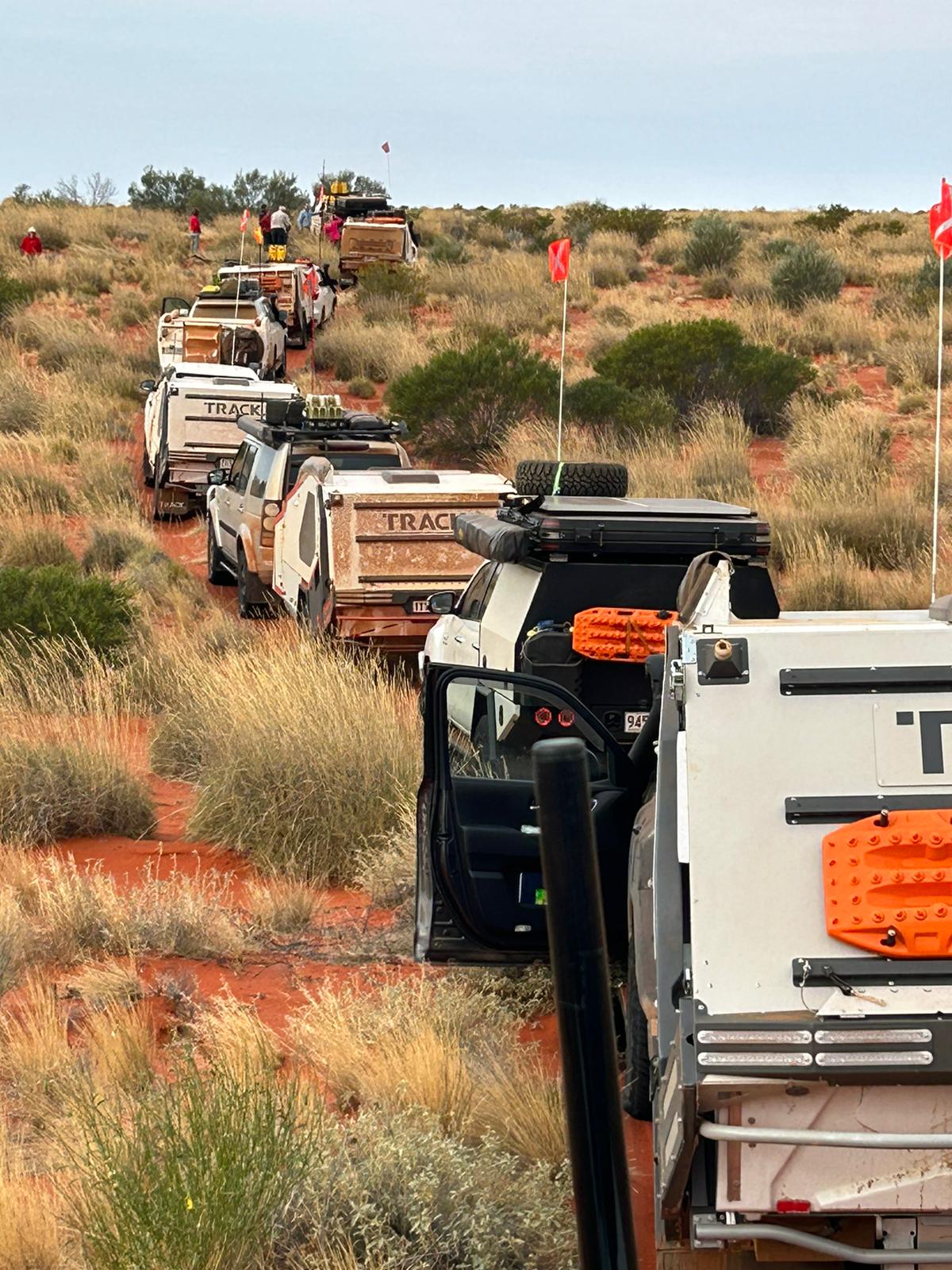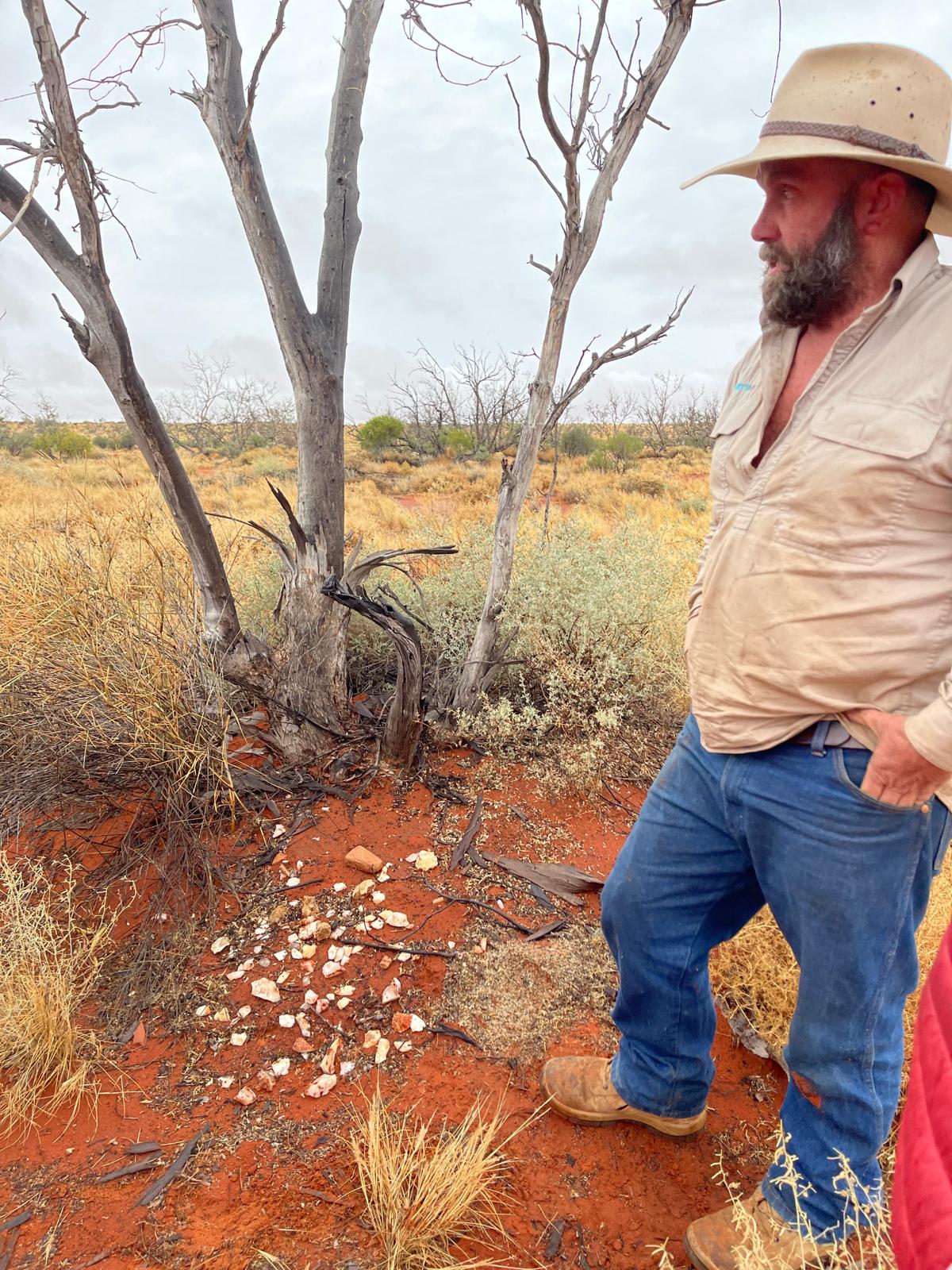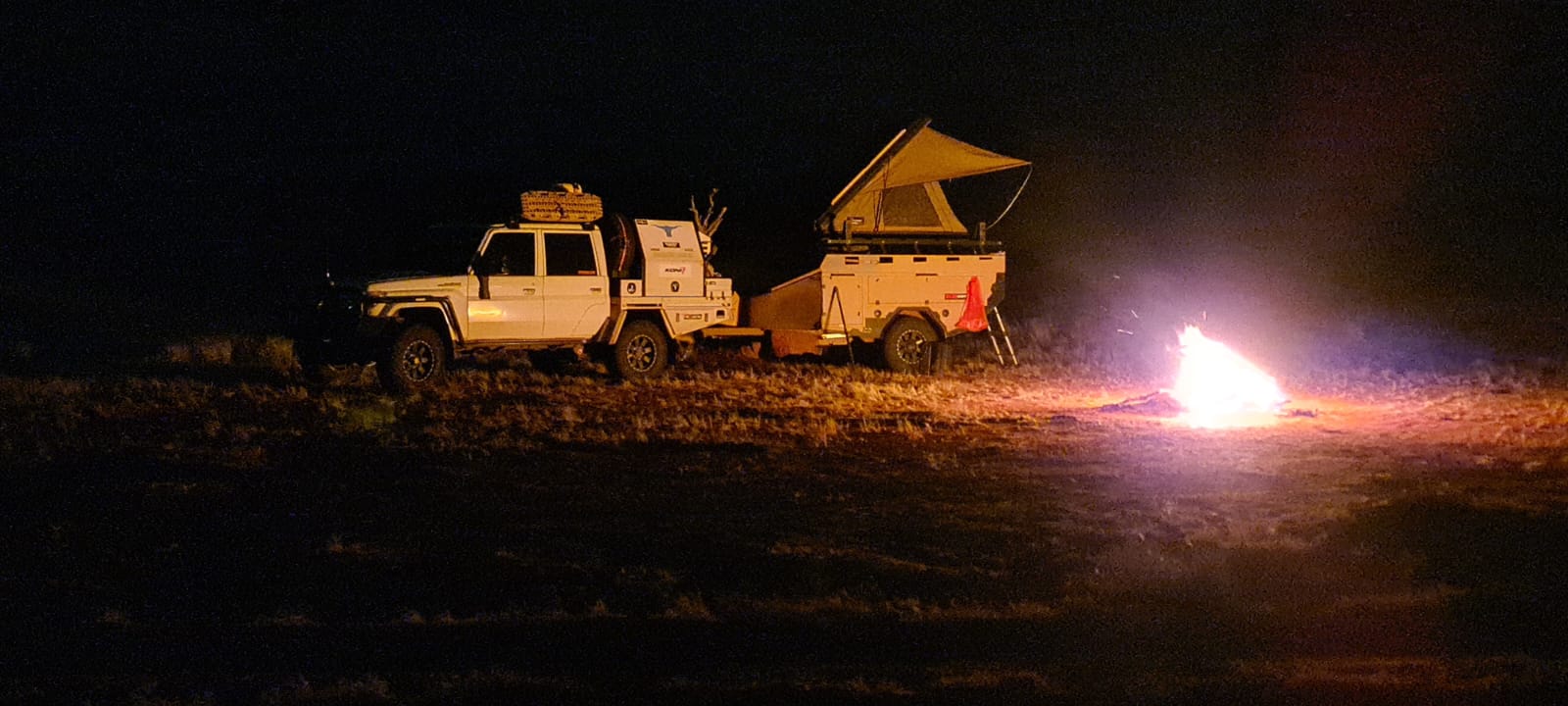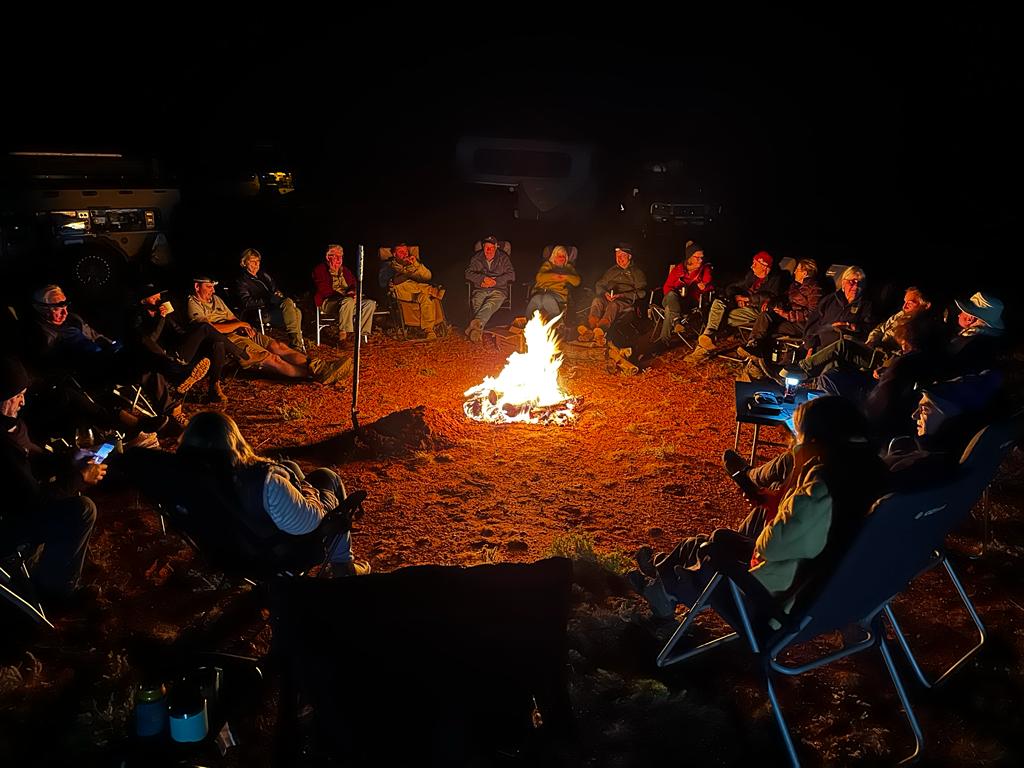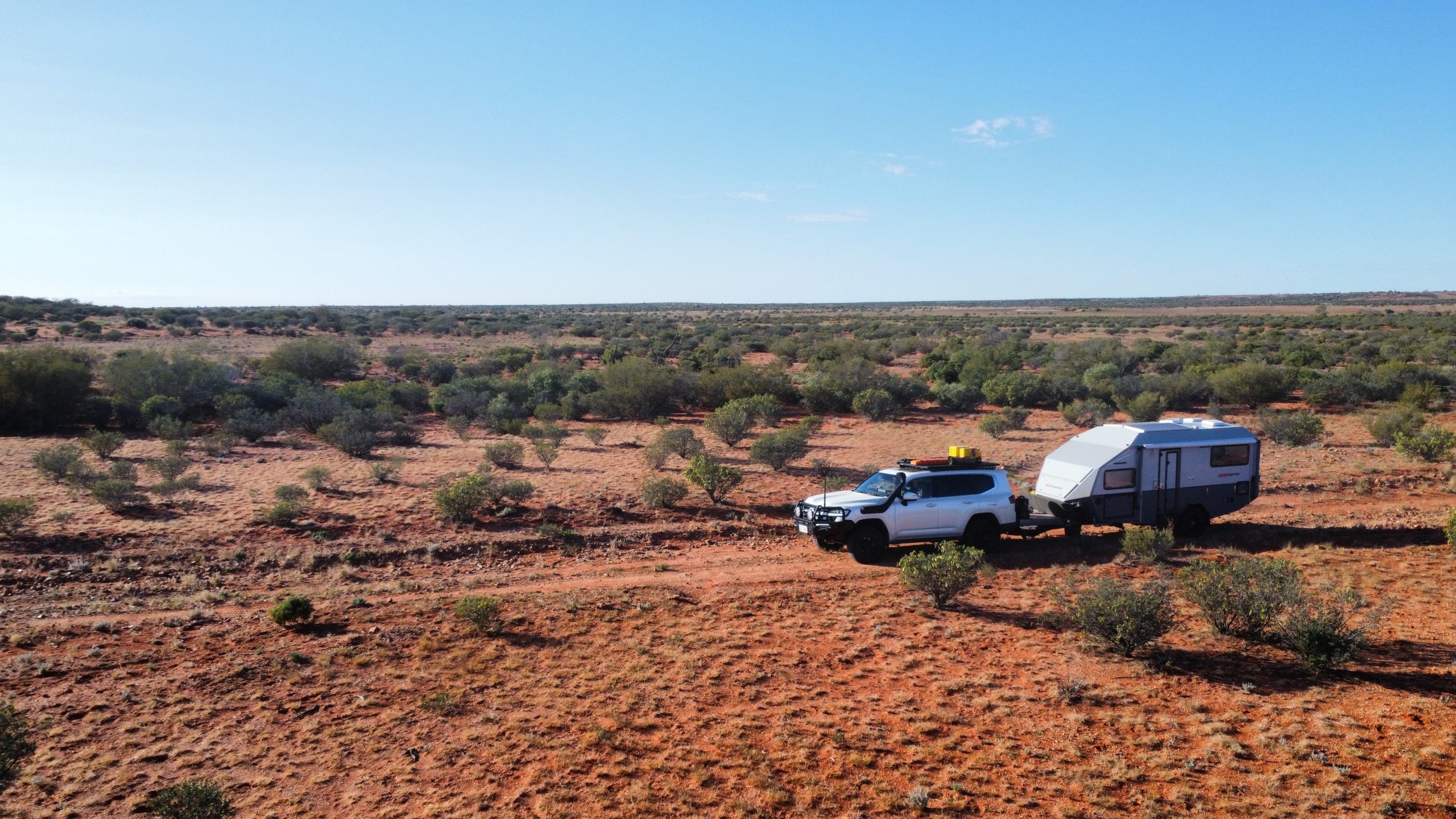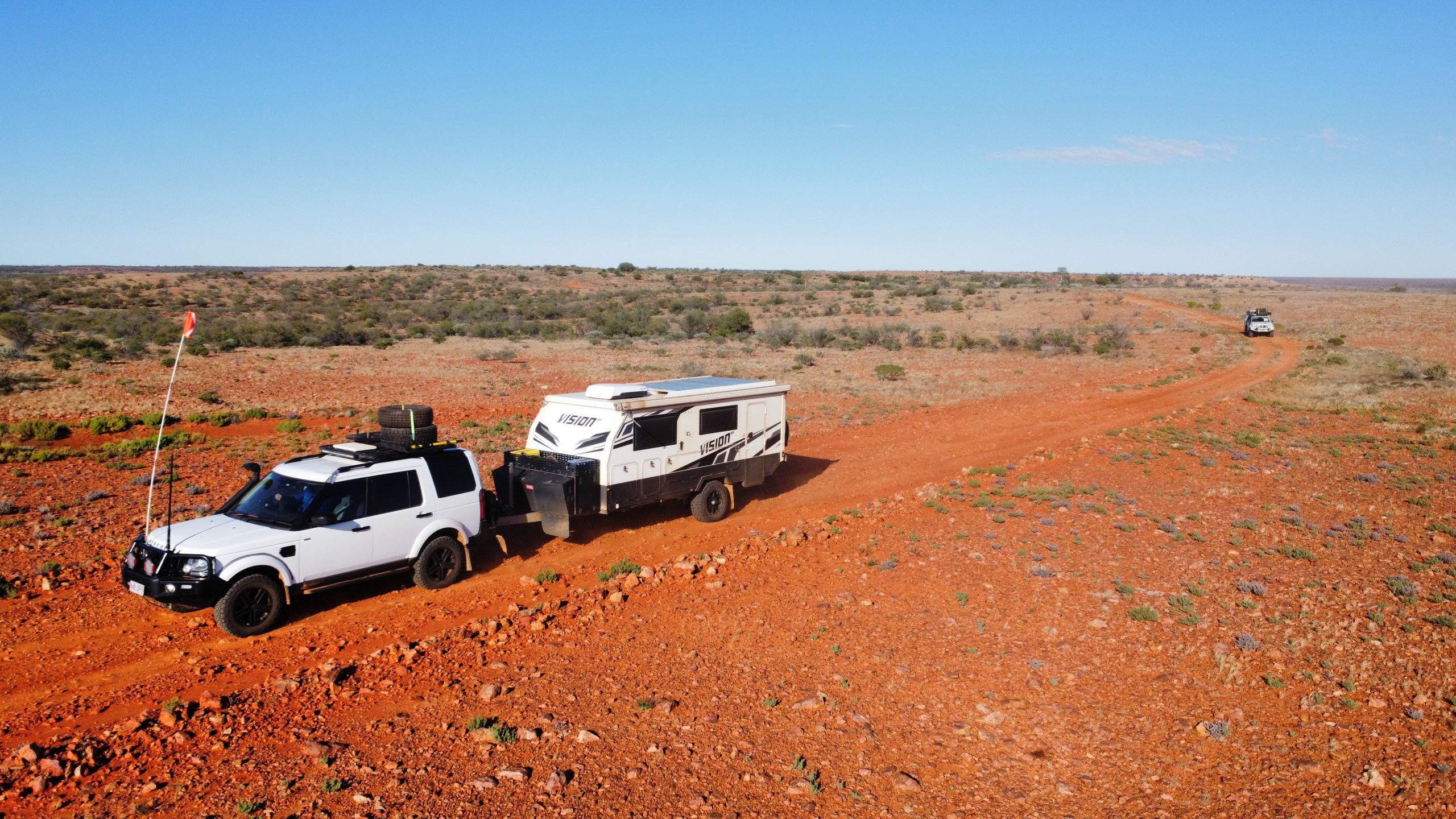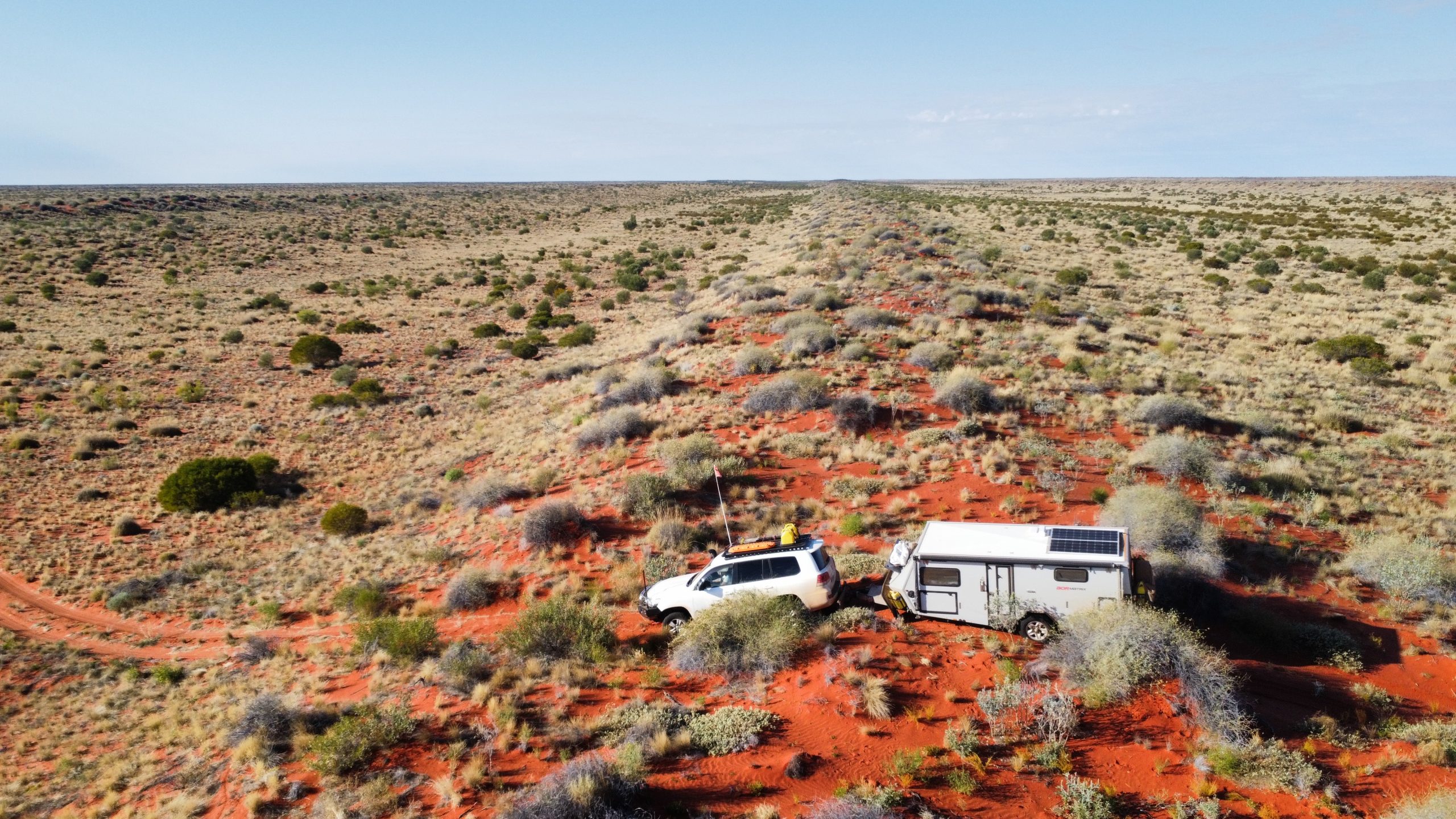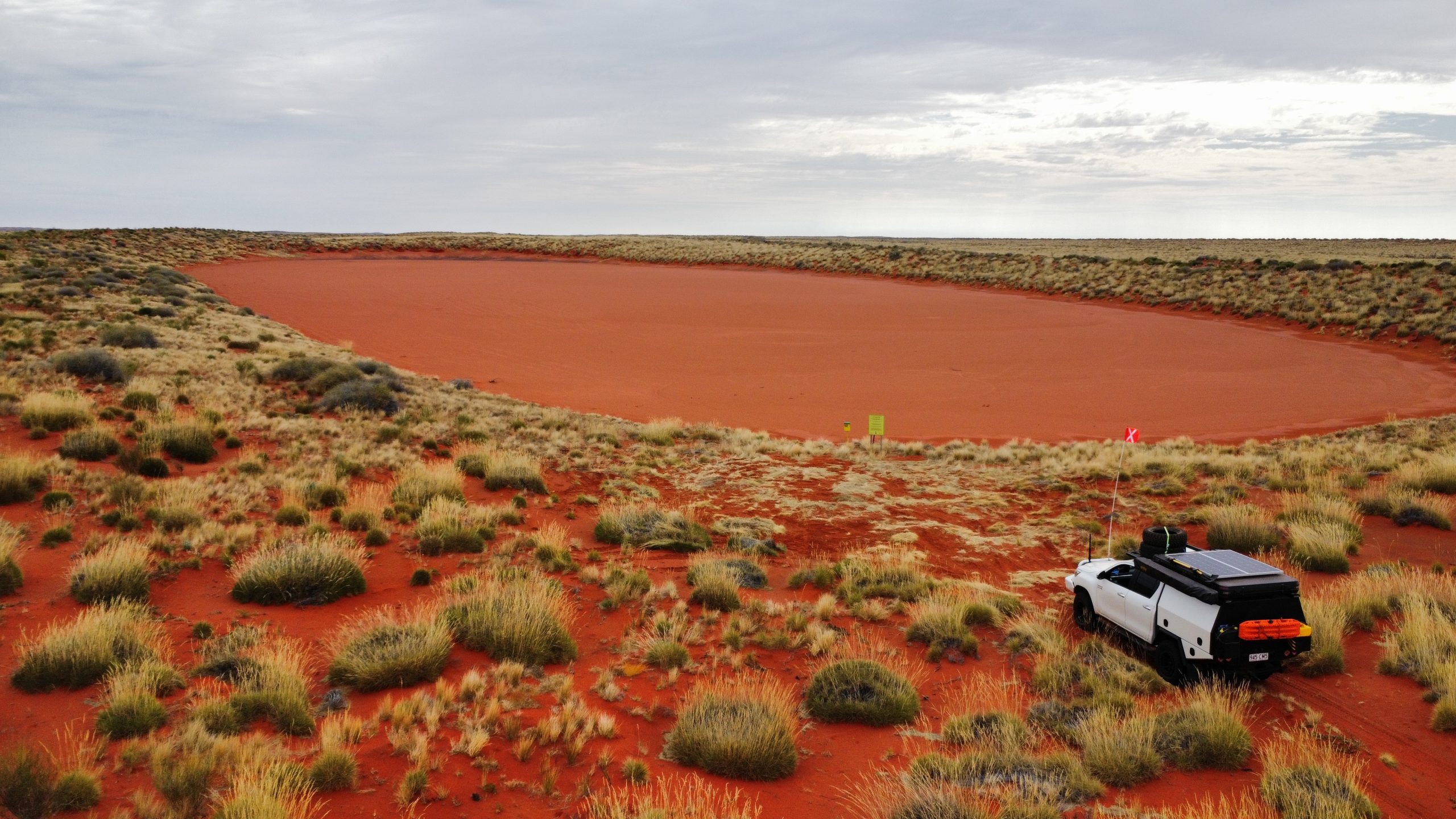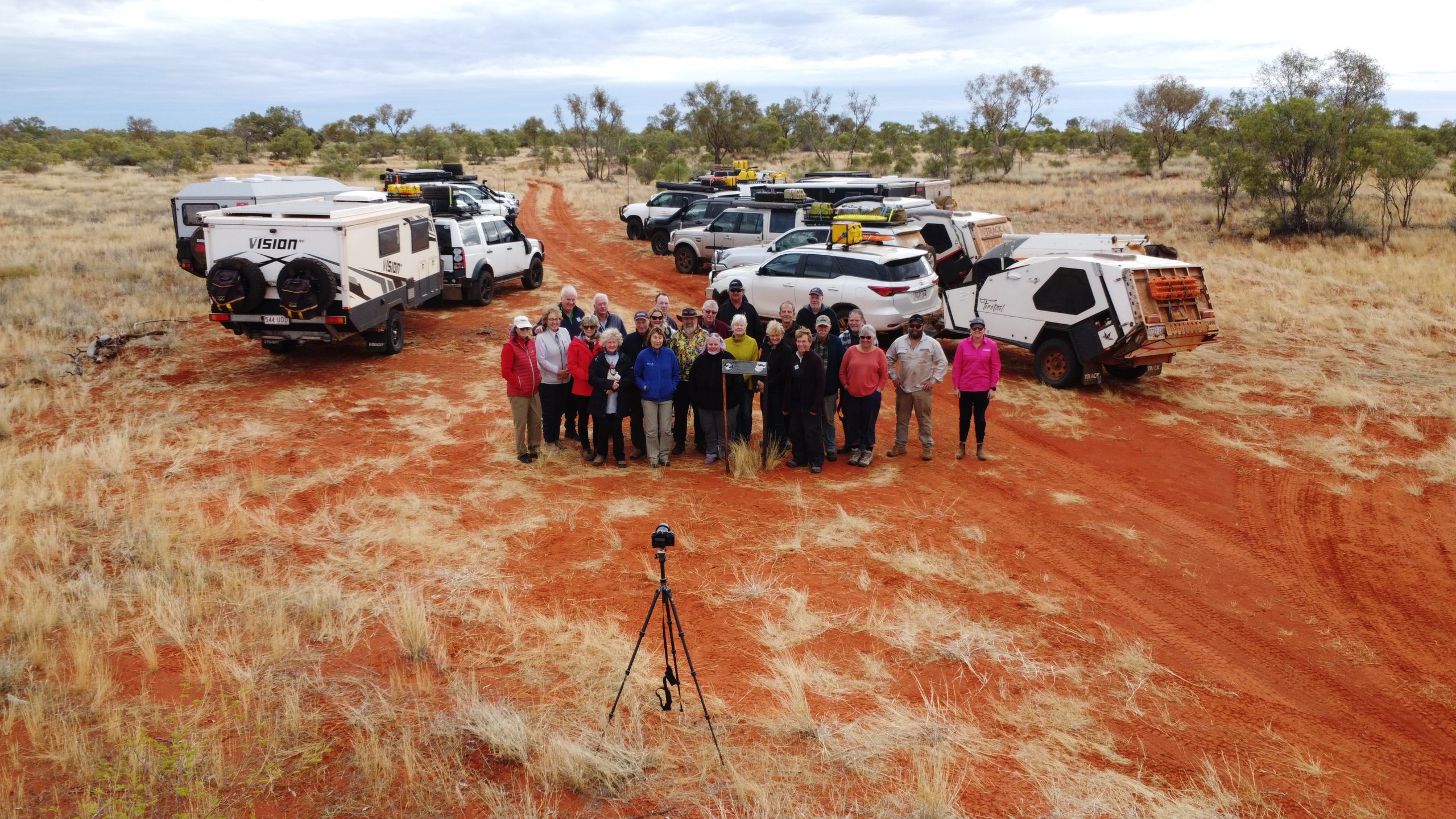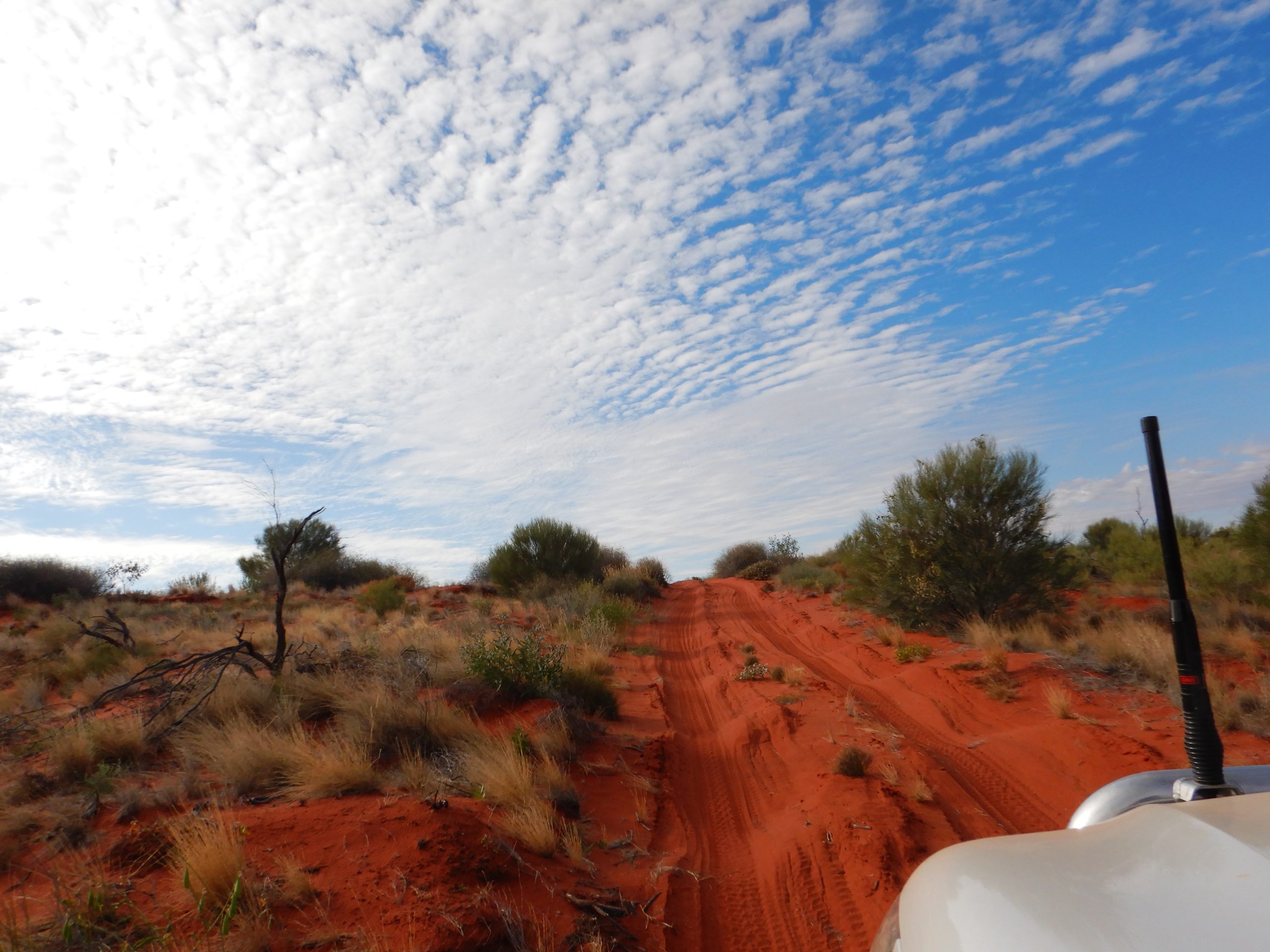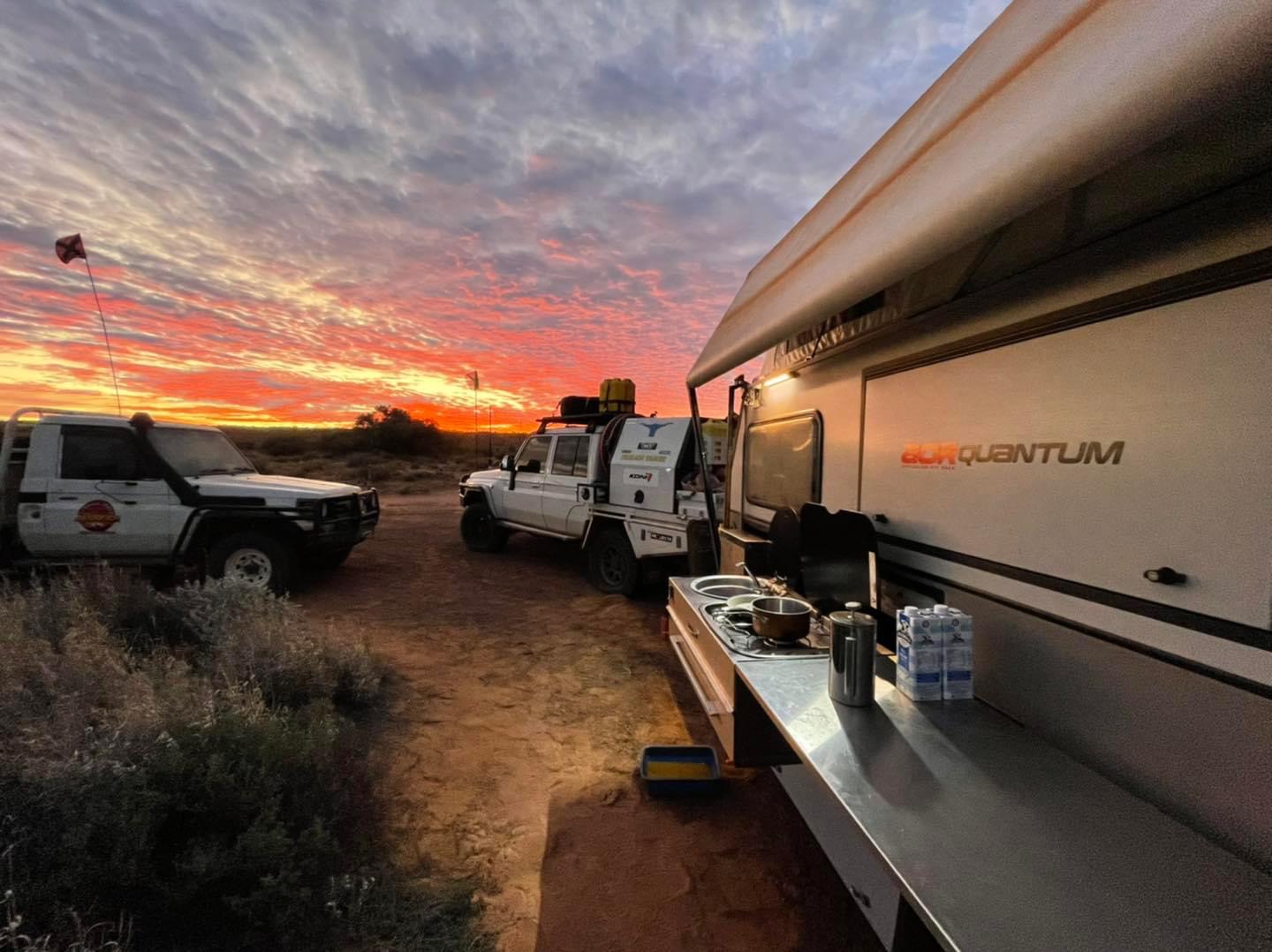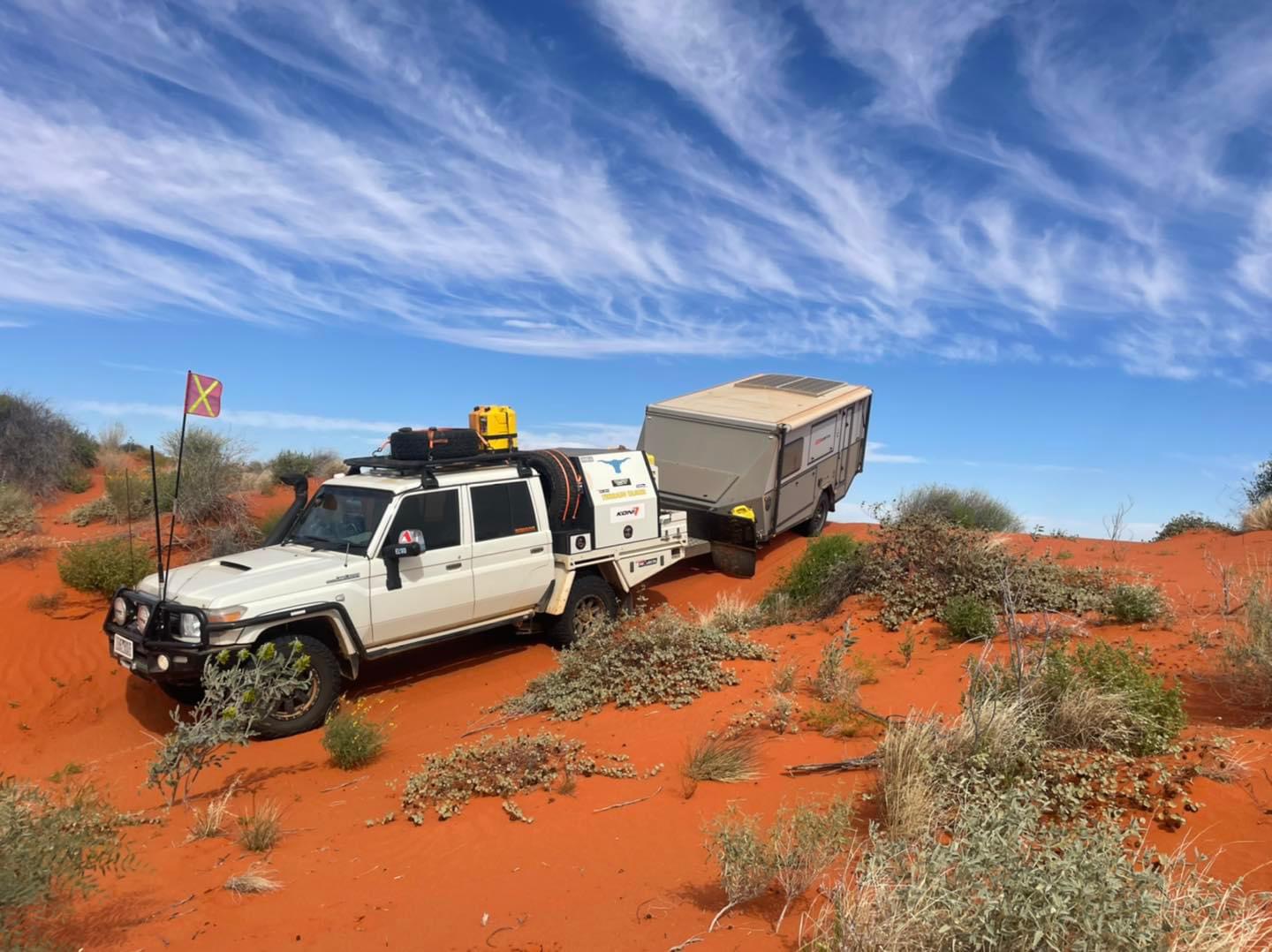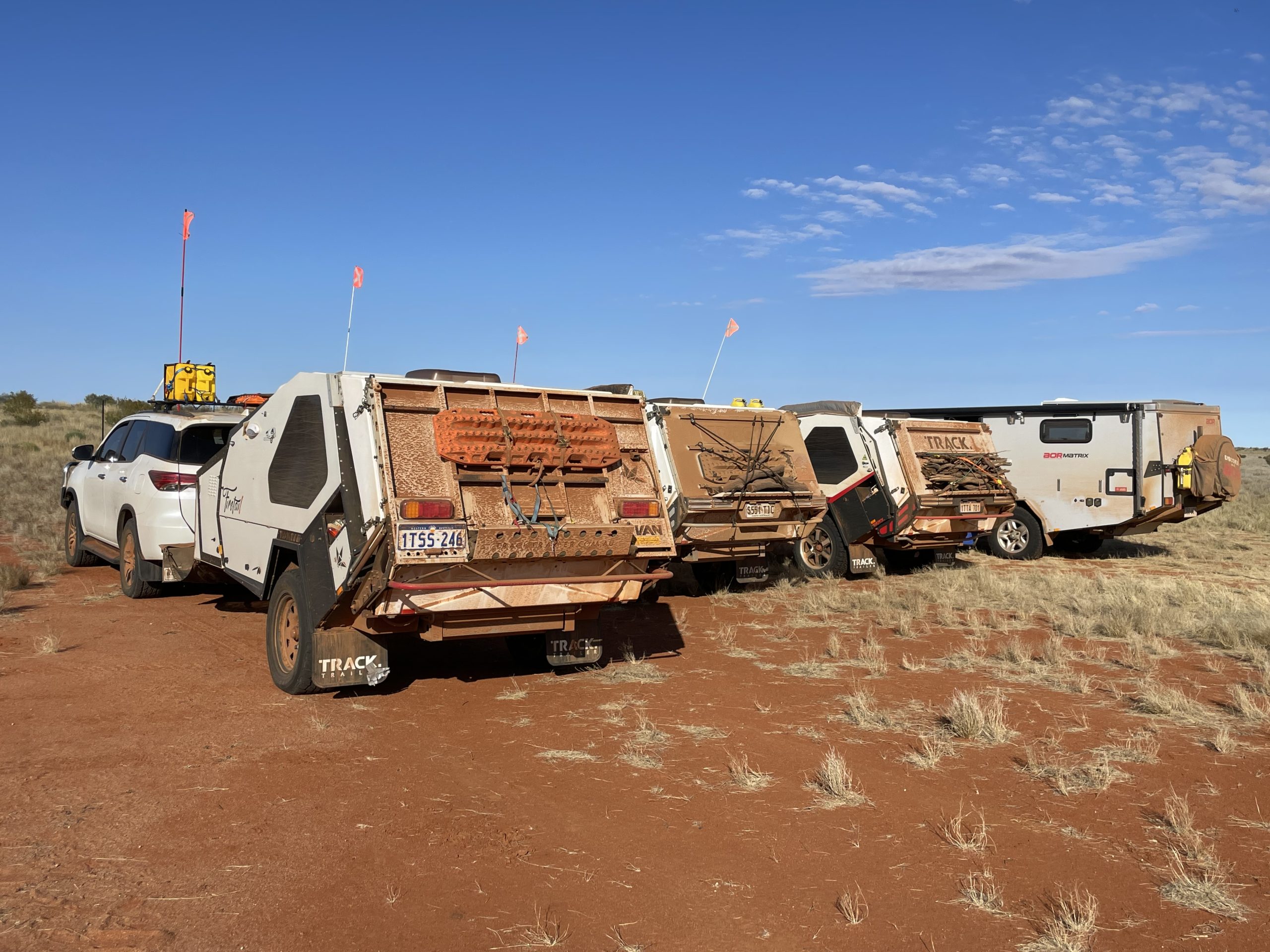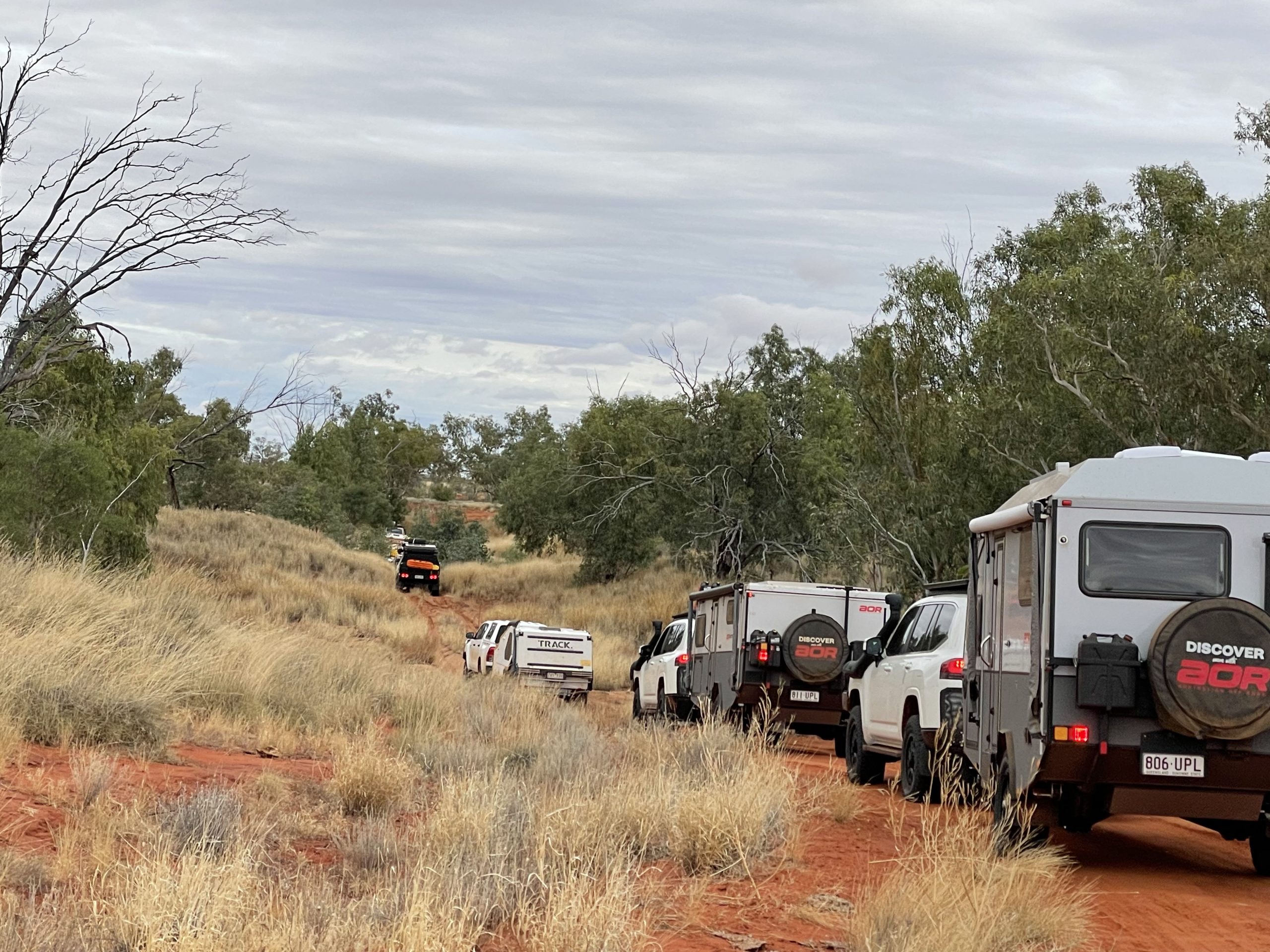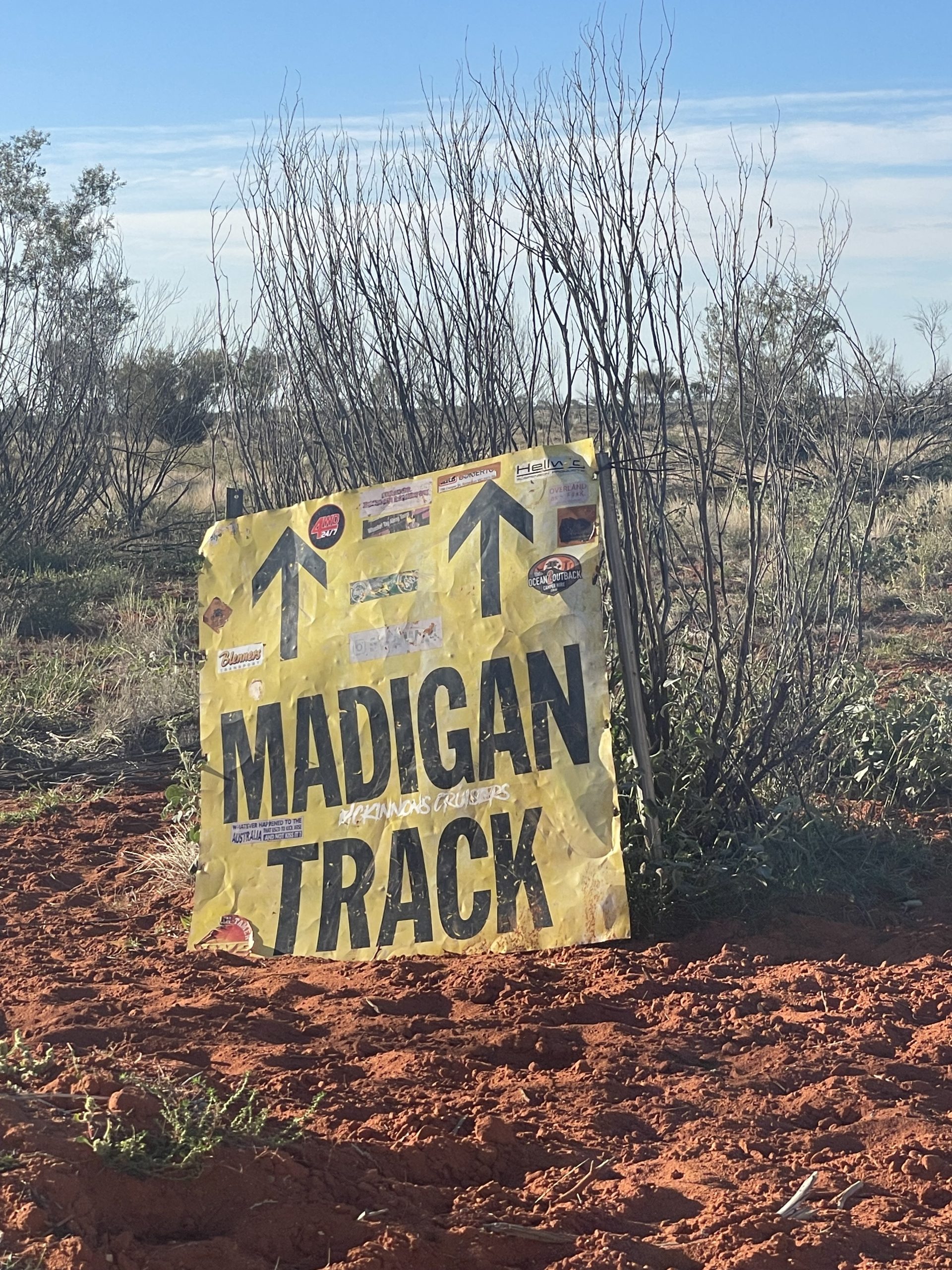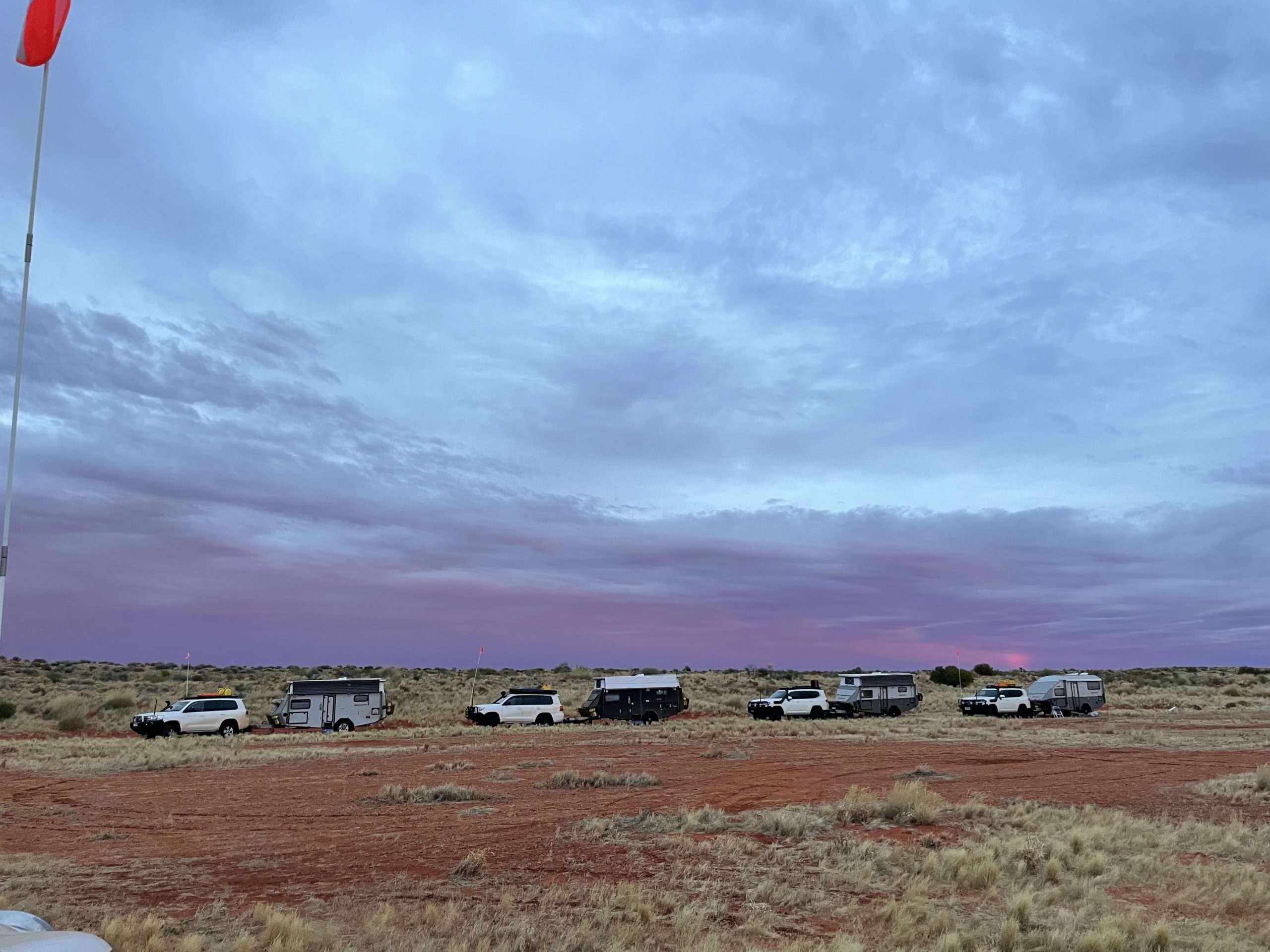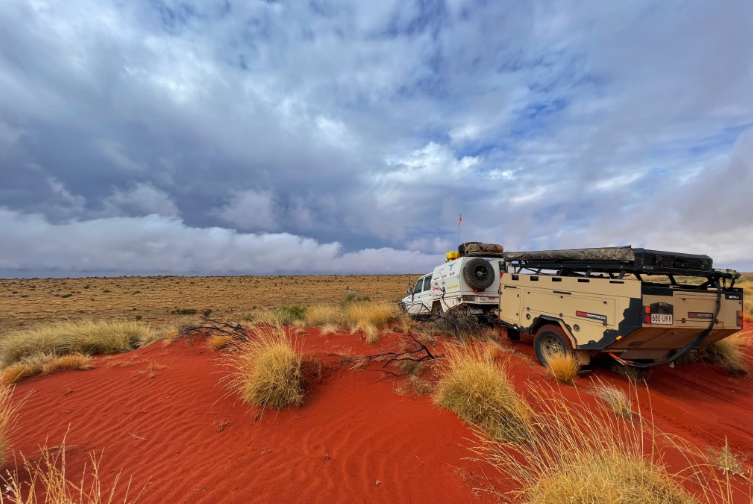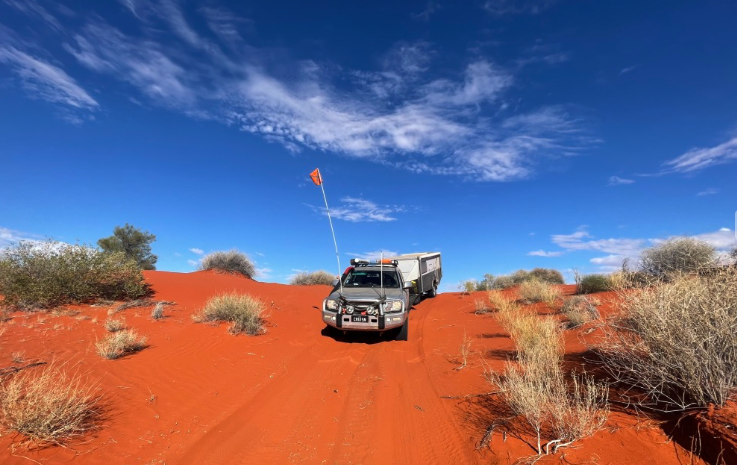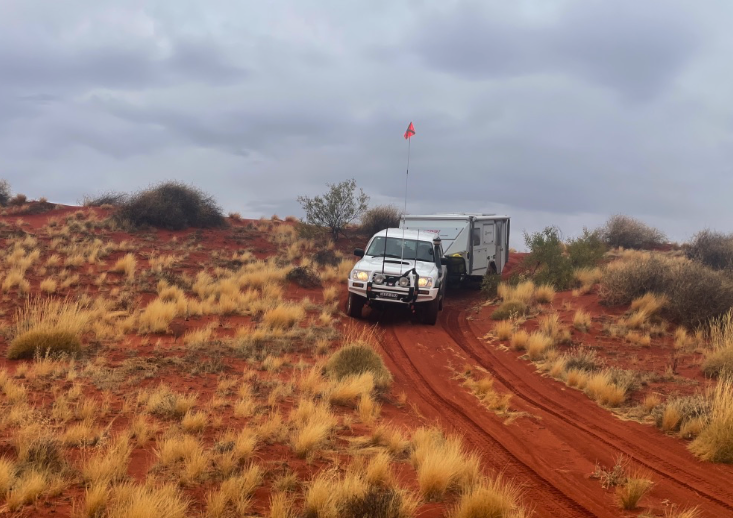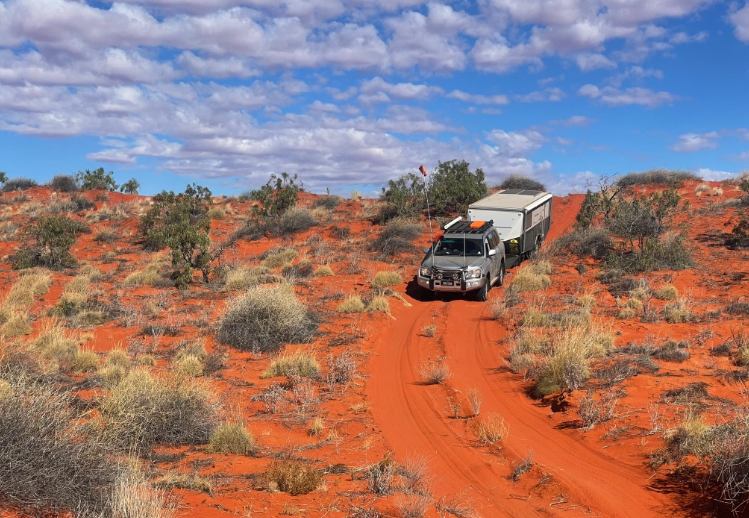
Join Moon Tours for an unforgettable tag-along adventure across the remote northern fringe of the Simpson Desert, following the footsteps of Cecil Madigan’s 1939 scientific expedition.
The Simpson Desert is the largest parallel sand dune desert in the world, featuring over 1000 dunes across its vast and remote expanse. Towing in this challenging environment requires careful preparation, the right techniques, and a good dose of patience.
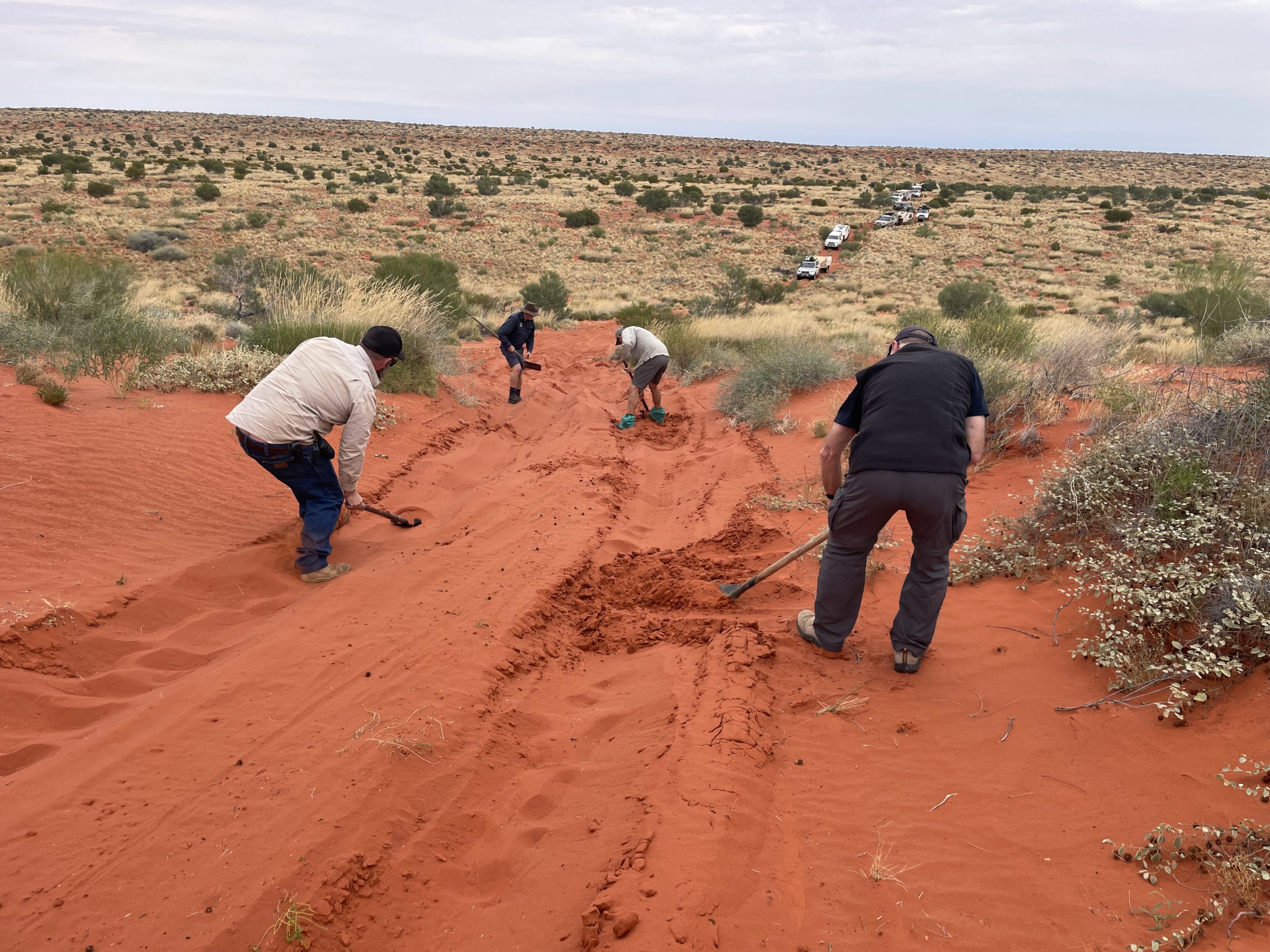
At Moon Tours, we take pride in our proven ability to guide small groups of camper trailers across the desert with minimal environmental impact. In fact, we often leave the tracks in better condition than we find them by tidying up the dunes as we go and backfilling any recovery damage.
For this expedition, reliability is key:
Vehicles:
Trailers:
The Madigan Line Trailer Expedition isn’t just a trip—it’s an immersive experience in one of Australia’s most remote and iconic landscapes. Whether you’re an experienced tourer or new to off-road travel, Moon Tours is here to guide you every step of the way.
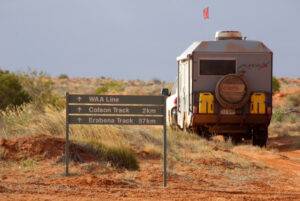
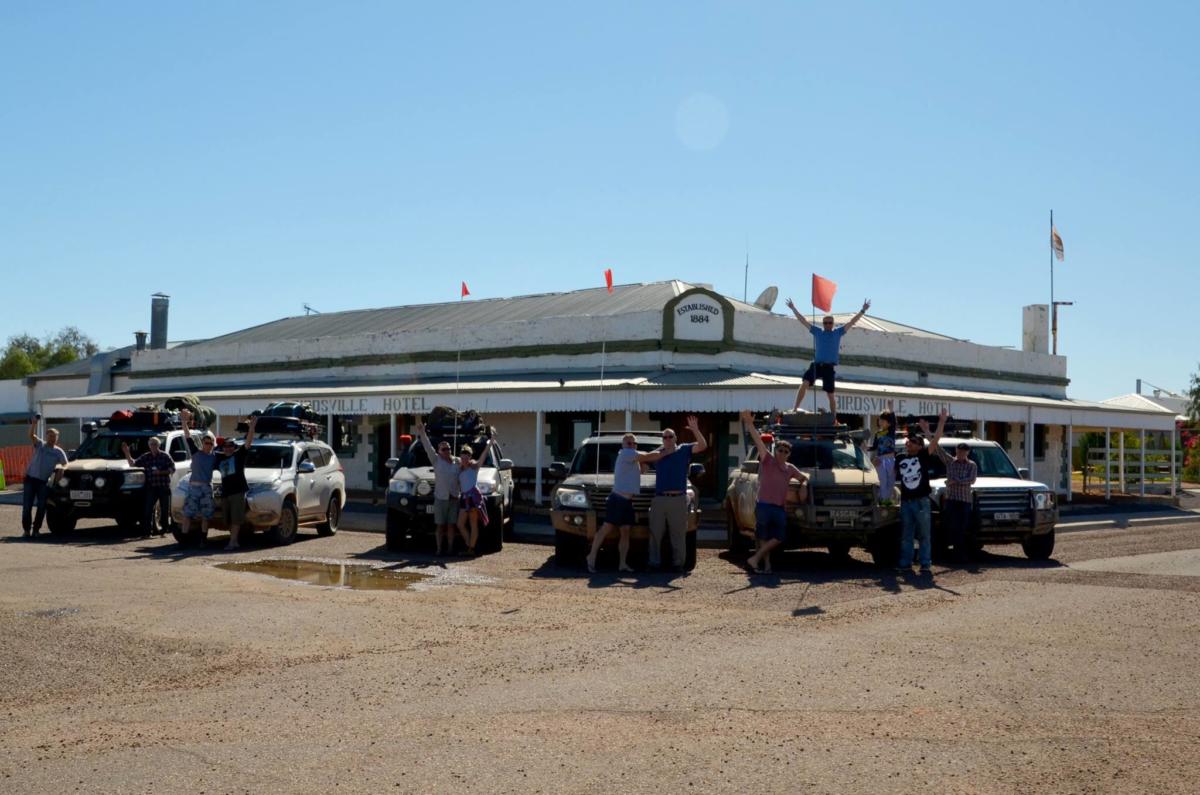
🌄 Kick-off Point: Mt Dare
🚙 Journey Highlights:
🗓️ Distance Covered: Almost 800 km
Note: The itinerary may vary slightly depending on track conditions, group pace, or mechanical issues.
Join us on this adventure of a lifetime across one of Australia’s most remote and awe-inspiring landscapes!
About Your Guides
(For the full backstory, check out the Our Story tab in the main menu.)
The crew behind the wheel.
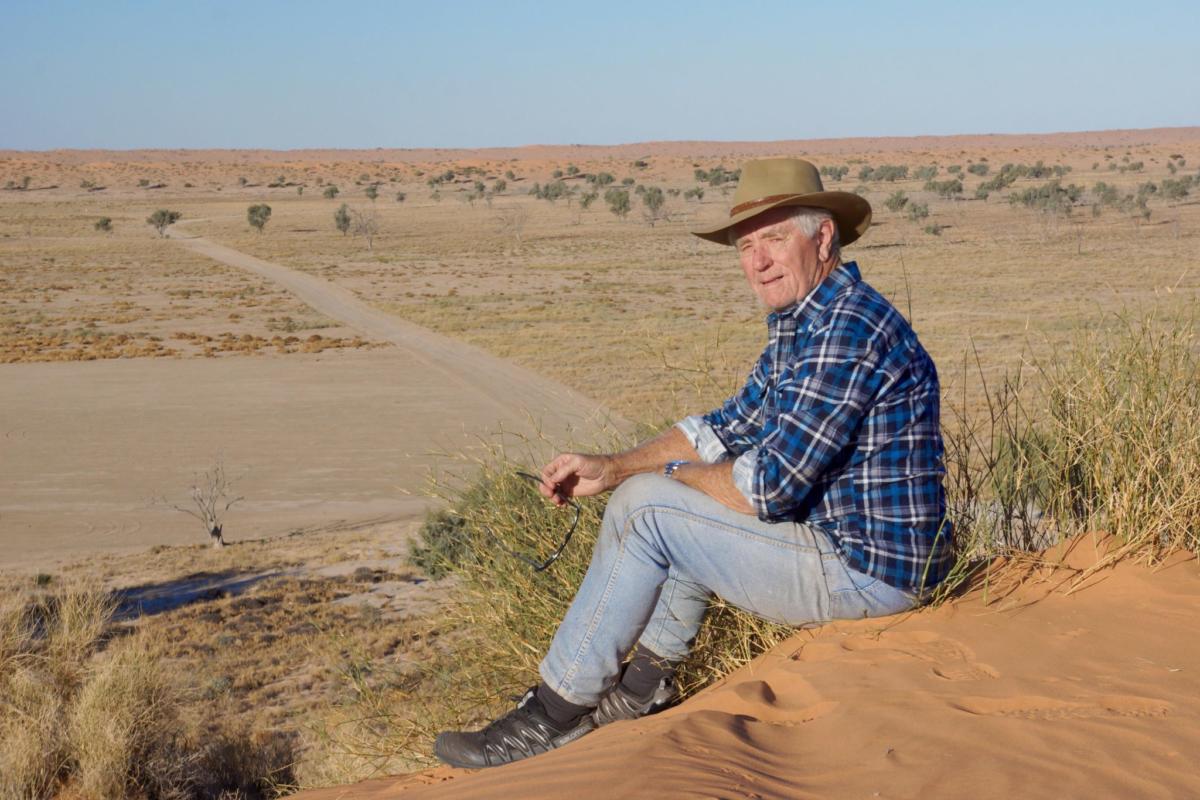
At the core is Trent Moon, with the branch not growing far from his father’s tree. Ron Moon, a true icon of Australian remote travel, still joins tours well into his late 70s. Trent grew up with red dirt under his boots and a steering wheel in hand. His parents, Ron and Viv Moon, helped pioneer modern Australian remote travel, publishing guidebooks and mapping some of the country’s toughest tracks. Ron remains Editor-at-Large of 4×4 Australia Magazine. For Trent, it’s the family business. Raised in the bush and behind the wheel before his teens (don’t try this now, kids!), he’s led countless Simpson crossings and adventures across Australia, Africa, and the sea.
Trent, Matt, Ben, and Bertus—best mates for over 30 years—have explored just about every corner of Australia together (Vic High Country, Cape York, Simpson Desert, the Kimberley… you name it), plus half a dozen African countries. Their friendship and experience set the tone for every trip: fun, safe, capable, and full of great stories.
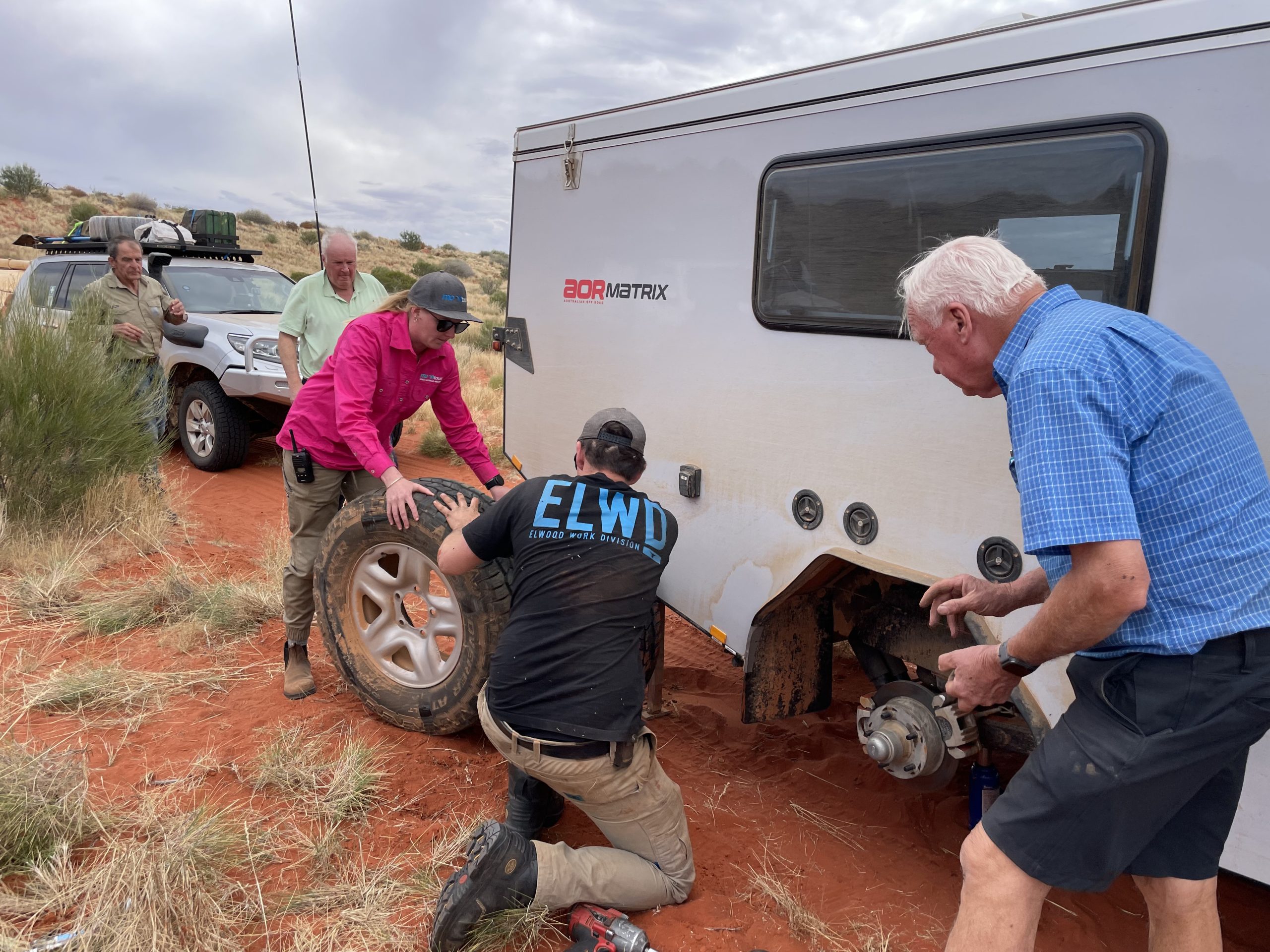
Matt is an exceptional leader and long-time guest favourite. He’s towed his AOR Q+ with his family into the country’s harshest conditions, combining great bush mechanic skills with top-notch problem-solving. Matt regularly leads desert trips for Moon Tours and is a huge part of the quality and value guests experience on tour.
Ben rounds out the trio. Another high school mate, he’s been on countless trips with Trent and Matt. Ben is the ultimate team player—a fan favourite who’s always ready to lend a hand, get stuck in, and share the experience with plenty of humour and care. A great mate to have by your side on any adventure.
Bertus, originally from South Africa and now calling Kununurra home, has guided in 36 countries, led expeditions with Australian Geographic, and trained Gurkhas in bush survival. He took Trent under his wing back in 1996 and has been an essential part of the team ever since.
Chief Jimmy is the engine room of Moon Tours. He works side by side with Trent at HQ and out on the road. Known for his calm presence, dry humour, and exceptional mechanical skills (especially on Toyotas—he’ll reluctantly fix “the others”), Jimmy is a guest favourite and keeps the wheels turning and the adventure rolling.
Corey & Sophie are a powerhouse team. Sophie runs much of the admin and guest communication, while Corey, a heavy diesel mechanic, is your “hands-on, get-it-done” guide. They’ve led multiple Moon Tours into Cape York, the Simpson, Victorian High Country, and the epic Coast 2 Coast. When they’re on tour—you’re in safe hands.
Harris & Bri are the ultimate fix-it duo. Harris loves a mechanical challenge and usually finds something to weld or repair. Bri is right there backing him up, both happy to dive in and help out wherever needed. Guests love their energy and enthusiasm.
Cam, based in Alice Springs, is a full-time mechanic and shop manager with Terrain Tamer. With plenty of Simpson crossings and Coast 2 Coast tours under his belt, Cam’s a loveable country bloke who keeps everything running smoothly (and always with a smile).
Together, we don’t just guide—we make sure you have the confidence, capability, and backup to enjoy every minute of the journey.
You’re in very good hands out there
Despite what people might say about towing in the desert – traversing the Simpson along the Madigan Line can be a very enjoyable and a fairly relaxed drive – with the right approach, techniques we will teach you and a good set up it’s might even feel like a bit of a doddle.
But don’t underestimate the slow relaxed driving, the constant undulations, ups and downs and mogul type track conditions put serious strain on suspension and chassis. These two major components are at most risk on a Simpson trip, towing or not.
Shocks cop a beating, even though we’re averaging 20-25kph.
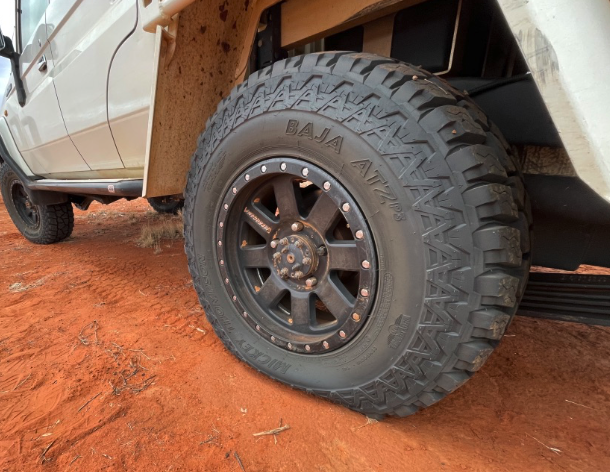
Tyres ran at low pressures also have a lot of pressure on them.
UHF Radio with External Aerial – mandatory
Air Compressor – mandatory
Tyre Gauge / Deflator – mandatory
Jumper Leads and/or Jumper Pack
⛽ Enough for a 800km (based on average 30L/100Km 240L)
💧 100L minimum per vehicle – max 200L (bending stub axles on vans is a real risk and all due to weight – water is heavy. Bring what you need, not what you can carry)
Book a full inspection with an experienced 4WD specialist (not a general mechanic)
Check and replace worn suspension components, bushes, shocks, and steering
Inspect brakes, brake lines, and pads for wear
Thoroughly inspect all aftermarket accessories (bull bar, rear bar, roof racks, awnings, spotlights, aerials, etc.)
Check all aftermarket wiring for wear, damage, correct fusing, and safe routing
Inspect wheel bearings and repack or replace if needed
Service diff, transfer case, gearbox oils, and engine oil
Check for any leaks or loose fittings under vehicle and under bonnet
Test battery health and electrical system load
Confirm tyre pressures and inspect for uneven wear or damage
Re-torque critical bolts (suspension, wheels, tow hitch, recovery points)
Book a full inspection with a specialist camper trailer service centre
Check all suspension components, bolts, bushes, and shackles for wear or cracking
Test all external lights, brake lights, indicators, and number plate lights
Inspect handbrake operation and brake cable condition
🛞 Check/replace wheel bearings
Remove and inspect all trailer wheel bearings
Repack with high-quality wheel bearing grease or replace if any wear or damage
Carry at least one full spare bearing kit for each axle
🔌 Check electrics
Test 12V circuits, Anderson plug connections, and trailer plug wiring
Inspect all wiring for chafing, loose connections, or corrosion
Confirm battery condition and charging system
Test water pump, fridge wiring, and any other 12V accessories
🔩 Structural integrity
Inspect chassis rails, A-frame, drawbar, coupling, and welds for cracks or fatigue
Check the condition and mounting of all external accessories (jerry can holders, stone guards, spare wheel carriers, gas bottle holders)
Ensure all hatches, latches, locks, and hinges are secure and working properly
Check condition and pressure of airbag suspension systems if fitted
Being well-prepared with the right spare parts and gear is essential for a safe and successful trip, whether you’re touring with us or exploring on your own. Even if you don’t know how to replace these items, having them in your kit essential if you want help from those that do. Here’s what we recommend! Some of these spares must be carried when travelling with Moon Tours – others are highly recommended.
All of these items are common to be replaced on tour.
Of course, each vehicle and trailer differs in terms of parts and what can be serviced in the field versus what requires specialised tools and a workshop. For example, if a LandCruiser 200 snaps wheel studs and nuts, the vehicle becomes undriveable without spares. However, with the necessary spares on hand, this issue is an easy fix, and you’ll be back on the road in no time. These spare parts take up very little space but can make a huge difference in saving your trip. We strongly recommend researching common issues specific to your vehicle or trailer and carrying the appropriate spare parts to help prevent potential breakdowns.
🏎️ Serpentine Belt – mandatory
Radiator Hoses – recommended
Tensioner Pulley – highly recommended. Car will not run without one
🛞 Shock Bushes – some are serviceable, some are not. Check yours and carry spares if they are.
Misc Bolt & Nuts
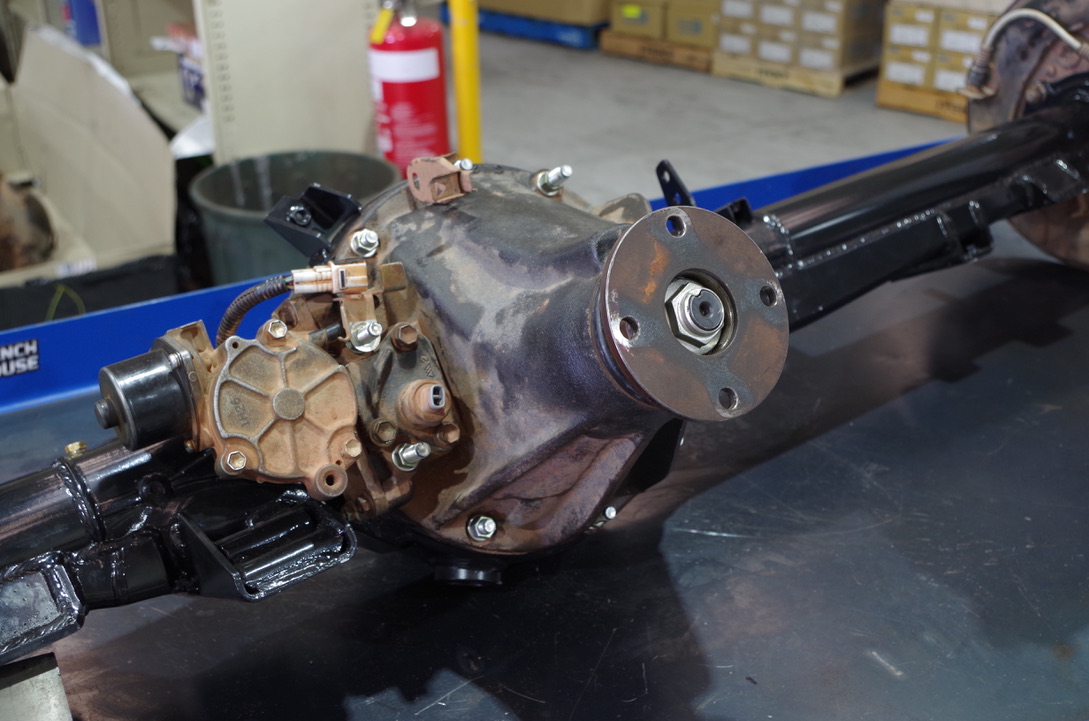
🔩 Wheel studs and nuts for vehicle and trailer – mandatory
(This is a common issue and easily repaired. Ensure you have the correct studs and nuts for steel and alloy wheels on both vehicle and trailer.)
🛑 Brake Pads / Brake Shoes – A set for Front & Rear & Trailer – mandatory
🚛 Prop Shaft / UNI Joint – At least x1 Front and x1 Rear – recommended
(They may differ front to back. When towing, your UNI Joints are operating under extreme conditions. If one were to fail, you would lose the drive to that entire axle making you 2WD. Towing in 2WD in an off-road environment will put a massive strain on that axle. Carrying a spare could save a lot of heartache, but they’re easy to replace if one fails, and they’re not very big to store in your spare parts kit.)
Water hose, joiners and tap fittings
Brake pads or shoes
Wheel Bearings
Spare Airbag, hose and fitting (if you run full air set up, i.e. no coils)
D Shackles
Wheel Bearings For All Your Trailer Axles/Wheels – mandatory
Wheel bearings for your vehicle?
It is rare these days to have original equipment bearings fail on a vehicle; however, when it does, it can be catastrophic. If an engine blows up, we can always tow a vehicle out. Without wheels…well. The best cure is prevention. A vehicle’s wheel bearings last a long time, but they don’t last forever and, in some instances, can be almost impossible to replace in the bush. It is absolutely essential that you have a reputable mechanic maintain and check these properly.
It is super important that your vehicle and trailer wheel bearings are thoroughly checked before any travel.
(Any free play or rumbling from the bearing is a clear indicator that it is on its way out and must be addressed as soon as possible. In newer vehicles, it is increasingly common to have sealed and pressed wheel bearings, which are more durable but significantly harder to service or replace in remote areas. However, if your wheel bearings are serviceable in the bush, such as with the LandCruiser 79 series, they can be easily greased and/or replaced, making them a practical spare part for remote travel.)
Adding spare parts like wheel bearings to your remote travel kit is highly recommended.
(Some of these parts take up very little room in your spare kit but can make a massive difference in saving your trip. We personally carry enough bearings for one side of the vehicle, both front and rear, as part of our spare parts kit.)
Heavy-duty plug kit (avoid plastic handles) – mandatory
Tyre slime – mandatory
Minimum Two Good Spares on Rims if wheels are interchangeable between 4WD and Van – mandatory
Highly recommend carrying an additional spare tyre (no rim). If we destroy a tyre and have a spare carcass – we will throw it on when we get somewhere like Warburton – giving us two spares on rims once again.
If the vehicle and van are not interchangeable:
Oil, Fuel, Air, and Cabin Filters – mandatory
🧽 Snorkel filter socks (great for convoys, just clean regularly)
Oil For Top Ups – mandatory
Engine, Diff/Transfer Case, Transmission, Power Steering (may be the same as your auto trans oil), and Brake Fluid. You don’t need to carry enough for a full change, 500mm – 1L top up bottles are fine and essential to your remote touring kit.
Bring more than one – mandatory
Ensure the powder is loose and the pressure is good
Cable ties – mandatory
Spare Anderson plugs – mandatory
Spare Trailer plug and Cigarette lighter plug – highly recommended
Fuses – mandatory
A mix of large blade 40–60A for compressors and Anderson plugs, standard and mini blade, glass fuses and inline heavy-duty fusible links
30A Relay (know your own vehicle and electrical set up – you may need bigger relays) – mandatory
Electrical Tape – mandatory
Multimeter and Test Light – we have these of course but we highly recommend you carry your own. Even if you don’t know how to use it.
Solder and Small Gas Torch work well – we carry this also and highly recommend you carry some too. 12V issues are more common than anything else on tour.
Electrical connectors and joiners – mandatory
Label wiring under the bonnet and inside the canopy for easier troubleshooting.
If everyone did this, it would make our life so much easier in the bush.
Sprays: lubricant, brake clean, contact cleaner, degreaser – mandatory
Radiator stop-leak – recommended
Fuel additives / injector cleaner – mandatory
JB-Weld essentials kit – mandatory
Gasket Maker / Sealant – recommended
Grease / Wheel Bearing Grease – mandatory (a small tub or tube is fine)
Basic tool kit – shifters, spanners, sockets, screw drivers, pliers, wire cutters, vice grip, hammer, Allen keys, sharp knife, hack saw, hex keys, cloth tape, gloves and rags.
Decent Jack – mandatory
A reliable jack and a jacking plate for stability on uneven terrain
Pry Bar or Tyre Lever – highly recommended
Rubber Mallet and Hammer – highly recommended
Cold Chisel and Punches
Cordless Tools – highly recommended
Impact Driver
Drill and
Grinder – With cutting and grinding discs
Rated Recovery Points – Front & Rear – mandatory
MaxTrax – min set of 4 – mandatory
(One for each wheel on the ground is recommended; having two in a pickle is not helpful.)
Kinetic Rope or Snatch Strap – mandatory
**Shackles (recommend soft shackles) – mandatory
Shovel – mandatory
Axe / splitter combo – recommended
Chainsaw – highly recommended
Winch ring
Tree protector
Winch extension strap
A couple of additional soft shackles
Dampener
📡 Satellite phone
🆘 EPIRB
🩺 First aid kit (broad spectrum antibiotics, painkillers, relaxants, morphine whistles – bring your own basic kit too)
❤️🩹 Defibrillator
🛠️ Winch
🔥 Welding equipment
⚙️ Grinder / Power Tools
🔧 Tools
🪑 Camp chairs
🍳 Cooking kit
🍴 Cutlery + dishwashing gear
🔦 Head torch + lights
🪓 Axe + shovel
AOR (Australian Off Road)
Track Trailer (Tvan)
Trakmaster
Patriot Campers
Cub Campers
Pioneer Campers
Kimberley Kampers
Ultimate Campers
Vista RV
RhinoMax
Safety is priority #1. Reliability is everything.
Be prepared & have the trip of a lifetime!
Tour Price:
AUD $6500 (incl. GST) per vehicle – covers up to 2 people.
Deposit Terms:
A non-refundable deposit of $1,000 or 30% of the trip value (whichever is greater) is required to secure your place. Balance due 60 days prior to start date.
We recommend reviewing our Terms & Conditions and taking out domestic travel insurance to protect your holiday investment.
Moon Tours expeditions aren’t your average tag-along.
The biggest difference? We operate with two fully equipped support vehicles on almost every single trip without exception — a level of backup and service unmatched in the industry.
Every trip is supported by fully equipped Moon Tours guide vehicles and trailers, backed by an experienced team dedicated to making your journey smooth, safe, and unforgettable.
From on-tour mechanical support and recoveries to managing logistics, navigation, and guest comfort, we handle the details so you can focus on the experience.
Whether it’s a desert crossing, a mountain pass, or a remote station track, our team has decades of first-hand experience in Australia’s toughest touring environments. We know exactly what’s possible, where the limits are, and how to make every trip challenging, scenic, and safe.
Our guests often tell us the same thing:
“You get more than what’s listed.”
And just as often, at the end of a trip we hear:
“We can’t wait to book and plan our next Moon Tour!”
We don’t oversell. We under-promise and over-deliver every time.
This is what we do. It’s our passion, and our business is built around it.
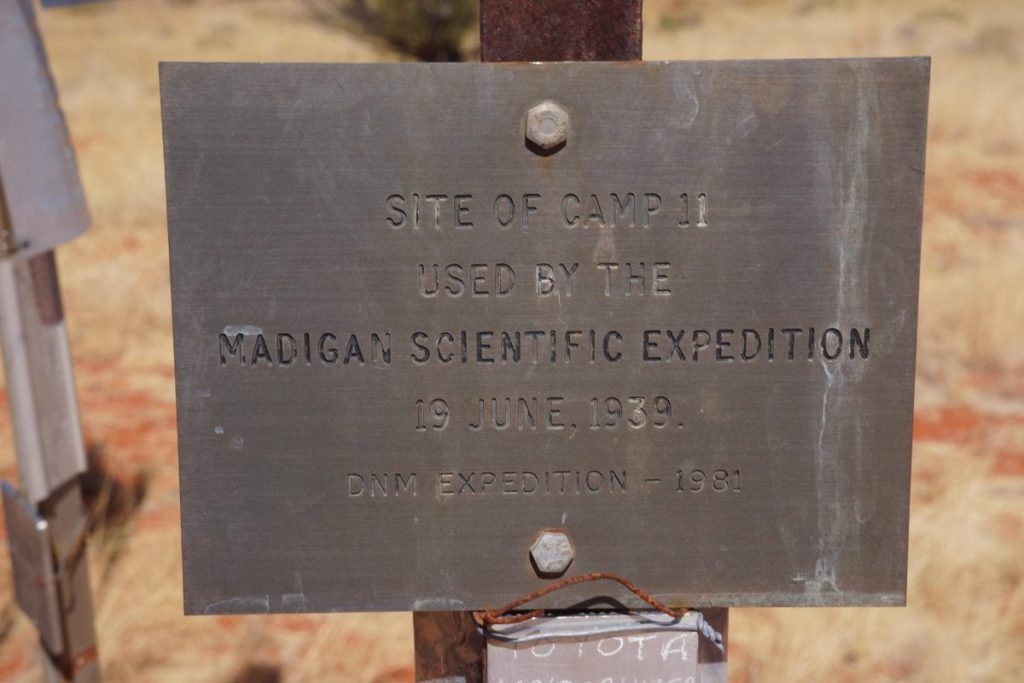
The Simpson Desert was once the last great blank spot on Australia’s map. Early explorers had only partially ventured into its vast expanse:
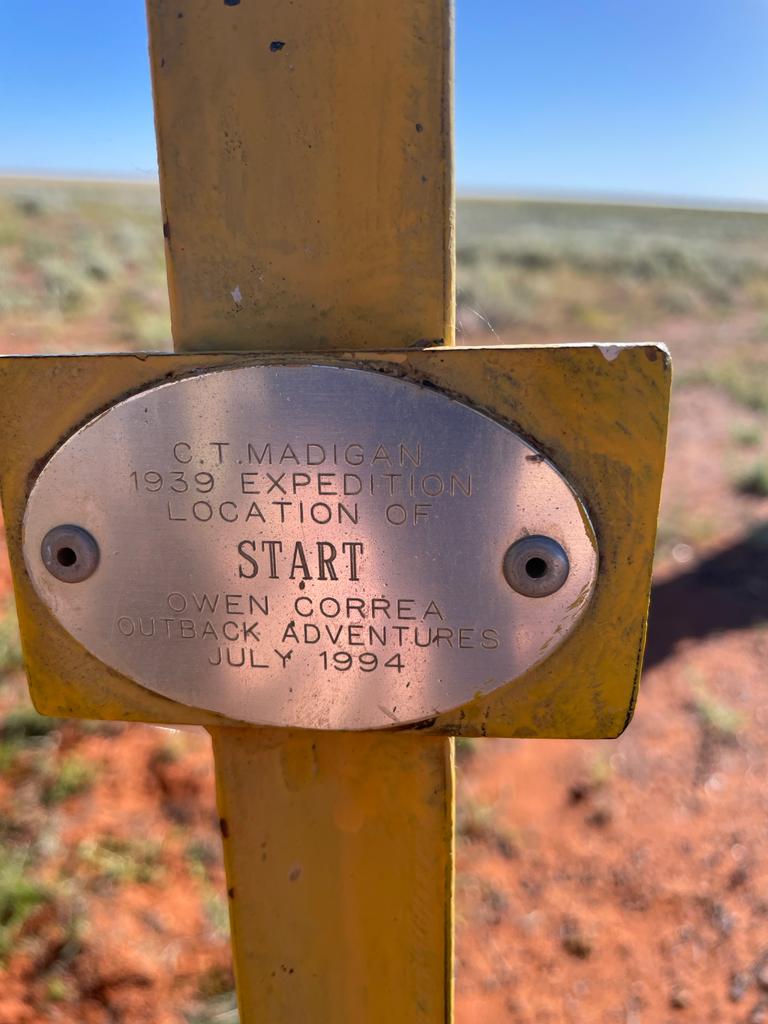
The Madigan Line is named after geologist and explorer Cecil Thomas Madigan, who led a party of nine men and 19 camels on an epic journey across the northern Simpson Desert in 1939.
Madigan named the Simpson Desert after the then-President of the South Australian Branch of the Royal Geographical Society of Australasia. His journey, detailed in his book Crossing the Dead Heart, filled in one of the last great blanks on Australia’s map.
The Madigan Line remains a rite of passage for adventurous travelers, offering a glimpse into the challenges and triumphs of Australia’s early explorers. Whether by camel or 4WD, it’s a journey into one of the most remote and awe-inspiring landscapes in the world.
Want to follow in the footsteps of history? Join Moon Tours for your own epic adventure across the Madigan Line! 🚙✨